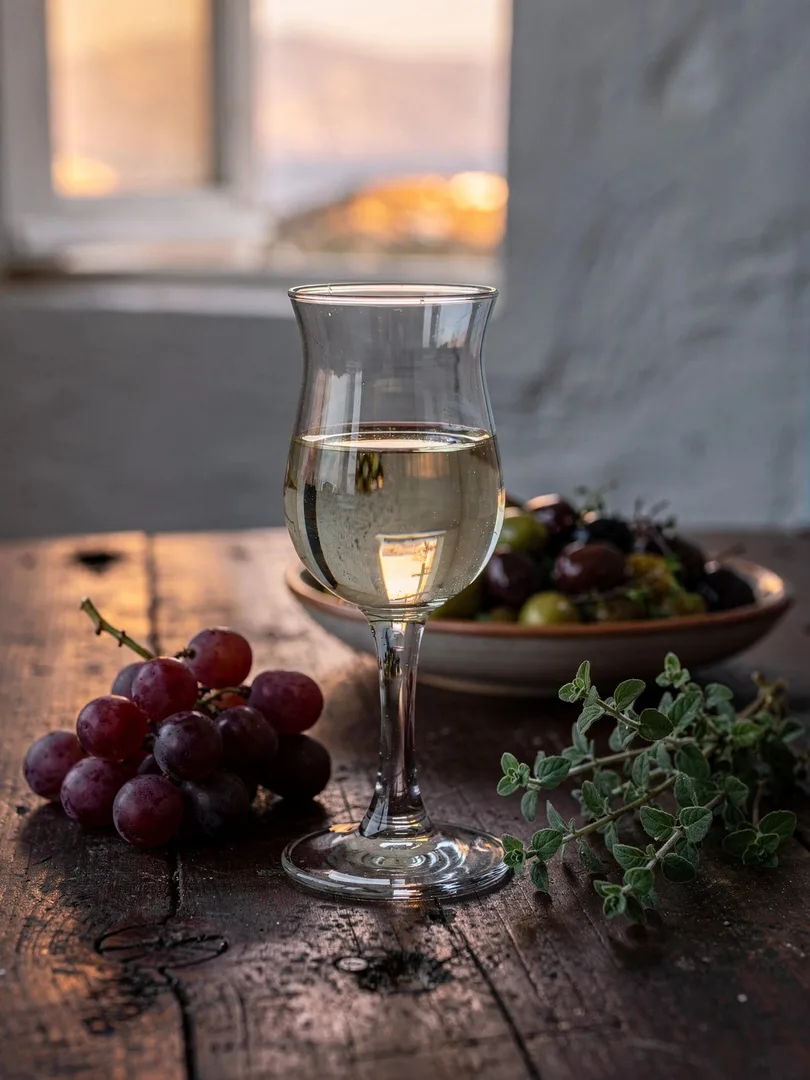
Tsikoudia and Zivania
Spirit Style
What's the difference between Tsikoudia, Raki, and Ouzo? Tsikoudia and Cretan Raki are the same thing: a clear pomace brandy made from wine pomace, without anise. Ouzo is an anise spirit, as is Turkish Rakı, which is why both turn cloudy when mixed with water.
Tsikoudia of Crete is protected in the EU as a geographical indication for spirits and falls under the pomace brandy category. The technical file describes it as colorless, clear, with intense aromas derived from the grape varieties and the production method. Dry, bold, and grapey — that's how distillers and tavern owners sum it up.
Cyprus is far off and deserves its own mention: there, the pomace brandy is called Zivania and also carries a protected geographical indication. It's distilled from pomace of Cypriot varieties, mainly Mavro and Xynisteri, and according to the Cyprus Chamber of Commerce, the specification sets a strength of 43 to 52 percent.
According to the Chamber, the name Zivania traces back to winemaking residues, called Zivana in Cyprus. Its origin thus resembles that of Tsikoudia: a brandy with character made from what's left over.
If a label reads Tsikoudia of Crete, the brandy comes from the island, even if the tavern owner just calls it Raki. This matters, because the word Raki alone means very different things on Crete, in Turkey, and across the Balkans: an anise spirit, a pomace brandy, or, as Rakija, a general term for fruit and grape brandy.
So the difference lies not in the raw material, but in the country, the blend of grape varieties, and the legal framework. On Crete, Vilana, Kotsifali, and Liatiko shape the aromas; on Cyprus it's two other varieties, and the minimum strength there is higher.
Tsikoudia of CretePomace brandy · Wine Pomace from Crete
- Alcohol
- 37.5–45 % vol
- Maturity
- 0 Years
Clear and colorless, bold with grape character, dry on the finish; no anise, unlike Ouzo and Rakı.