Meze and Carnival
Food & Tradition
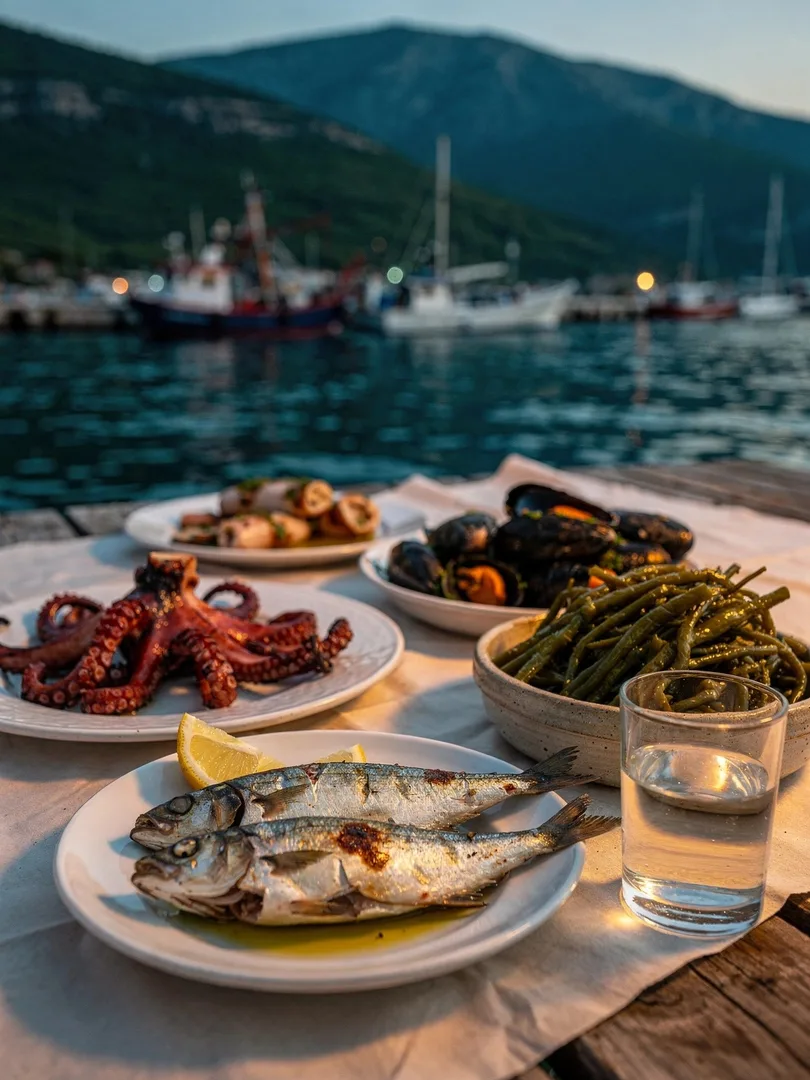
What is a Tsipouradiko? A tavern in Volos that serves Tsipouro along with meze, small plates that go hand in hand with the spirit. According to the Greek National Tourism Organisation, hundreds of such establishments shape the character of the port city at the foot of Mount Pelion.
According to tradition, refugees from Asia Minor, especially after 1922, brought with them the custom of pairing the spirit with small plates. At first, people drank Tsipouro from Tyrnavos and Pelion in tiny portions on its own, to build an appetite before lunch. Gradually, simple meze were added.
The ritual follows fixed rules: with every round of Tsipouro, today usually an Ikosipentari, a different meze comes to the table. Dried octopus makes the start, alongside pickled Tsitsiravla, the shoots of the terebinth tree. Fresh sardines and red mullet from the Aegean follow later, along with shrimp saganaki, stuffed squid, and steamed mussels.
Why does it all work so well together? The salt, vinegar, and oil of the meze need a counterpart, and dry, unsweetened Tsipouro provides it. The spirit stays small, the food substantial, and so the evening stretches out long, with no one in a hurry.
In Tyrnavos, Tsipouro is part of carnival. On Clean Monday, the first day of Lent, the festival centered on the dish Bourani is celebrated. The food is cooked in an enormous cauldron, groups spread tablecloths on the ground, and set out wine, Ouzo, or Tsipouro with water alongside.
From the pattern set in Volos, the Ouzeri and Mezedopolia later developed, which can now be found all across Greece: establishments where small plates and small glasses set the pace of the evening. The principle remains the same: small glasses, small plates, plenty of time.