Pomace of the Region
Fruit & Raw Material
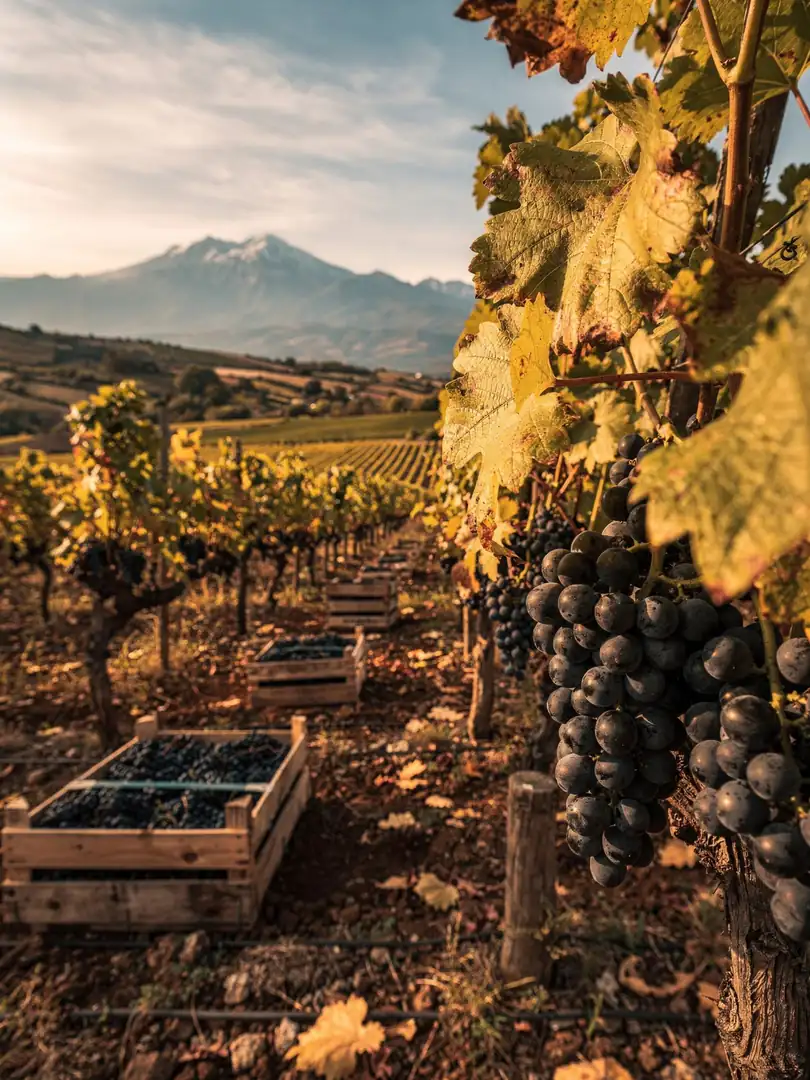
What grapes is tsipouro distilled from? Whatever grows right outside the door, and in Thessaly and Macedonia that turns out to be a surprisingly wide range. Around Tyrnavos, an old wine town, the Greek National Tourism Organisation points above all to the local black muscat. It yields pomace with floral, fruity aromas.
In Macedonia, Xinomavro comes into play, the tannic red grape best known from Naoussa and Amyndeon. At the foot of Mount Olympus grows the red wine Rapsani, made from Xinomavro, Krassato and Stavroto. Which variety ends up in the still is up to each producer, and that's why a tsipouro made from muscat tastes quite different from one made from red varieties.
The condition of the pomace depends on the color of the grapes. Red grapes ferment on their skins, so their pomace is already largely fermented through by the time of pressing and tends to be drier in character. White grapes are pressed before fermentation, so their pomace is still sweet and has yet to ferment. Both can become tsipouro, but the aroma turns out quite differently.
Harvest begins in late summer, but for the distiller what matters is the moment right after: the pomace must be stored fresh and clean before mold or acetic spoilage can take hold. EU rules permit a small amount of lees to be added, no more than 25 kilograms of lees per 100 kilograms of pomace.
Why pomace instead of wine? Out of tradition and frugality: the wine was the business, and the rest went into the still. In the winegrowing villages around Tyrnavos and Larisa, the pomace was left literally on the doorstep after pressing, and what began as waste turned into a family custom still practiced today.
Altitude also shapes the raw material. On the plain, grapes ripen quickly in the summer heat; on the slopes of Mount Olympus and in the cooler north, they ripen more slowly and with more acidity. Anyone tasting tsipouro from different areas is, in a sense, tasting a slice of the landscape too.