Weeks in the Cask
Mash & Fermentation
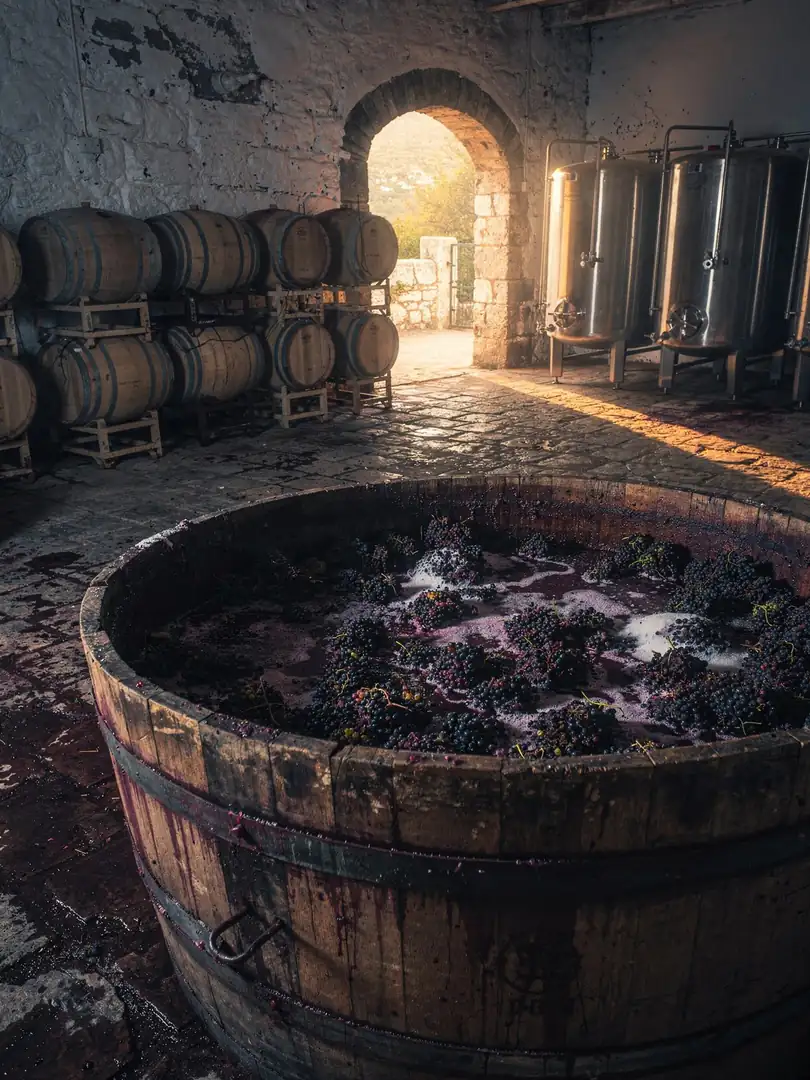
What happens to the pomace before it goes into the still? It becomes a mash, and that mash must ferment. With muscat or other white pomace, the remaining sugar in the skins converts to alcohol; with Xinomavro and other red varieties, part of that work has already happened in the wine cellar.
The mash is usually stored airtight, covered in casks or tanks. Small producers often fill the pomace into wooden casks, while larger ones use stainless steel tanks, which are easier to clean. Oxygen attracts acetic bacteria, and acetic spoilage ruins the later distillate beyond repair. How long fermentation takes depends on temperature and the pomace itself; it's measured in weeks, often running from autumn into the start of winter.
Yeasts convert the sugar into alcohol and carbon dioxide. Some houses let the wild yeasts on the grape skins do the work, others add cultured yeast. Wild yeasts produce idiosyncratic aromas, while cultured yeasts ensure a clean, predictable fermentation. Both approaches are common, and only the taste in the glass reveals which path a producer has chosen.
Methanol comes from the pectin in grape skins and already forms in the mash, not only during distillation. That's why the EU sets an upper limit for pomace brandy of 1,000 grams per hectoliter of pure alcohol. The real danger lies only in adulterated alcohol laced with industrial methanol, not in properly produced, commercially available tsipouro.
Anise plays no role yet at the mash stage. Whether a tsipouro later gets anise added depends on the producer's recipe. The anise-free version remains pure pomace brandy from grape to glass.
In Germany, private distilling without a license is prohibited. That's why tsipouro found here comes from Greece, from Tyrnavos for instance, made by licensed and inspected producers.