Steel or Wood
Maturation & Storage
A large share of the grappa on shelves has never seen a barrel. Clear grappa bianca rests after distillation in stainless steel or glass until the distillate settles, then it's cut with water to drinking strength and bottled. Its aroma comes solely from the grape, fermentation, and distillation.
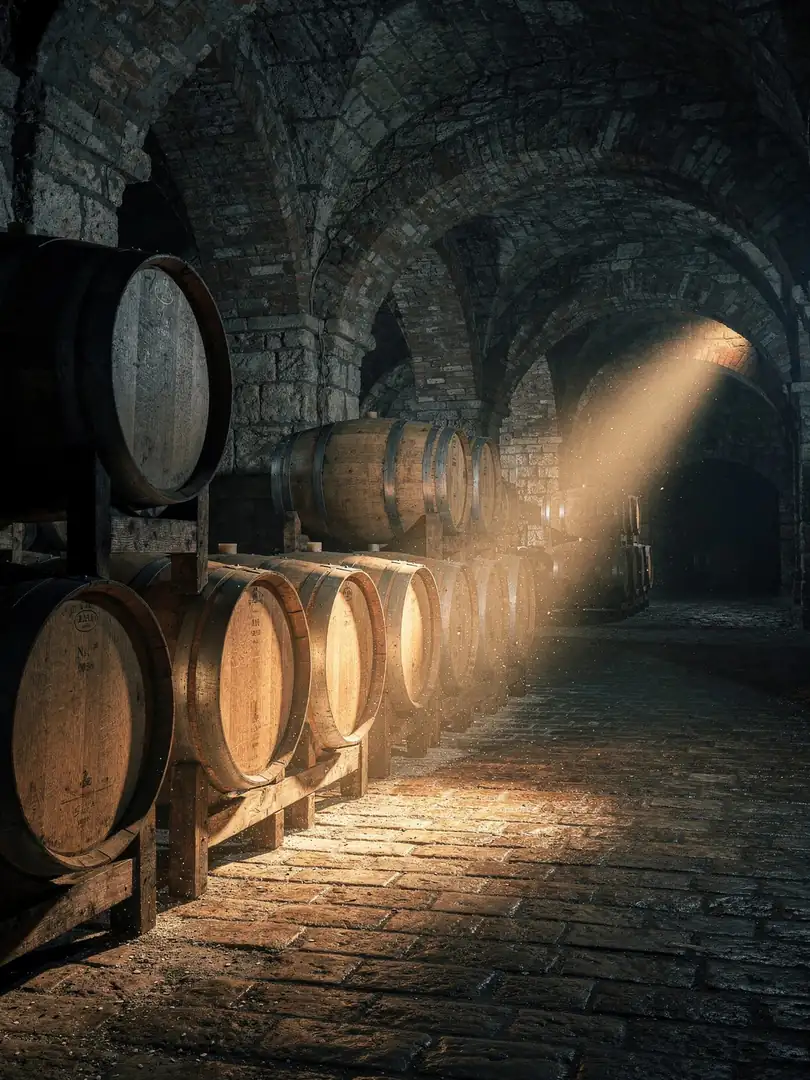
Two Italian words, regulated by Decree No. 747 of January 28, 2016, reveal a grappa's minimum age. Vecchia or invecchiata may only be used for grappa that has spent at least twelve months in wood under bonded storage. Riserva or stravecchia requires at least 18 months. Anyone reading this on the label knows genuine wood aging lies behind it.
The wood adds color and rounds out the spirit. Oak contributes vanilla, toasted notes, and spice, with the color ranging from pale straw to amber. Small barrels act on the distillate faster than large ones, which is why houses also differ by the size of their casks. Anyone wanting a consistent color may, under EU law, use caramel coloring for pomace brandy — but adding flavoring is not permitted.
Unlike Cognac or Armagnac, the raw material here is pomace rather than wine, so different rules apply. For brandy, the EU mandates at least one year in oak vessels of 1,000 liters or more, or six months in smaller ones. Grappa's age statements, by contrast, follow their own Italian regulations.
In the glass, the difference is immediately apparent. An invecchiata smells of vanilla, almond, and dried fruit, while a bianca smells of grape skin and blossom. Both have their place, since older doesn't automatically mean better — just different. Which style suits which occasion is a matter of taste, and houses like Nardini in Bassano del Grappa or Poli in Schiavon carry both types in their range.