Glass, Steel, Wood
Maturation & Storage
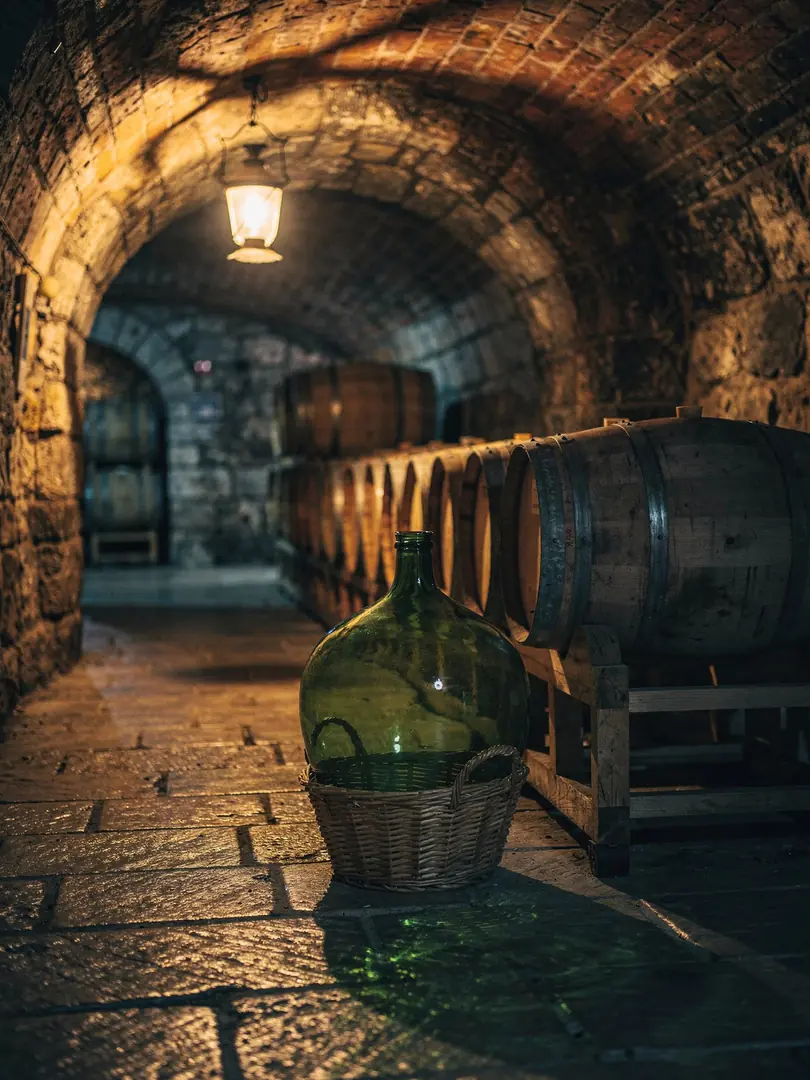
Most Grappa friulana stays young and clear. After distillation it rests in stainless steel or glass, allowing the aromas to knit together and the spirit to round out. Where the bottle stays crystal clear, the freshness of the grape takes centre stage, and Nonino's varietal brandies show this especially clearly. The advantage is obvious: nothing here masks the grape variety or the fruit.
Those who use wood need time. Under Italian regulation dating from 2016, a grappa may be called vecchia or invecchiata once it has spent at least twelve months in wood under customs seal, and riserva or stravecchia after at least 18 months. One example of the aged style is Nonino's Antica Cuvée Riserva, stated to have five years of maturation.
Wood turns the grappa golden-yellow and lends notes of vanilla, spice and toast. Colour alone says little about age, however, since caramel colouring is permitted in pomace brandy to adjust the hue. The age stated on the label always refers to the youngest component in the blend. This means maturation time is officially controlled, and buyers can trust the figure.
Fruit brandies sleep differently. Williams friulano and Kirsch Friulano usually rest in glass demijohns, known in Italian as damigiane, or in stainless steel, since they are meant to stay colourless. Time gives the spirit roundness, but no woody character. EU law recognises no age categories for fruit brandy; terms like aged or reserve are simply producer claims.
Light harms stone-fruit brandies, since hydrocyanic acid can form ethyl carbamate in bright surroundings — hence they are stored in the dark. Sliwovitz del Friuli-Venezia Giulia stays crystal clear when young and takes on a straw-yellow tone after wood ageing.