Variety Instead of Blend
Spirit Style
Friuli's signature spirits can be sorted by one question: is the pomace of many varieties distilled together, or that of a single one? The blend — found at Nonino under the name Tradizione — is meant to capture the character typical of the region. Alongside it stand the fruit brandies, which have their own tradition in the region. The Monovitigno, by contrast, expresses a single grape variety, and that was the innovation of 1973.
Anyone who smells several Monovitigno side by side notices the difference at once. White, aromatic varieties such as Ribolla Gialla smell of blossom and fruit; pomace from Schioppettino is often described as spicy and peppery, that from Pignolo as denser and more powerful. Picolit has a reputation for delicate floral notes. These are impressions, not rules: vintage, soil and distilling technique colour every bottle differently.
How does grappa relate to brandy? Grappa is made from pomace — the leftovers of the press — while brandy is made from wine itself, as with Cognac. That's why grappa smells of grape skin and seed, while brandy smells of wine and oak. The two are not the same, even if they end up in the same kind of glass.
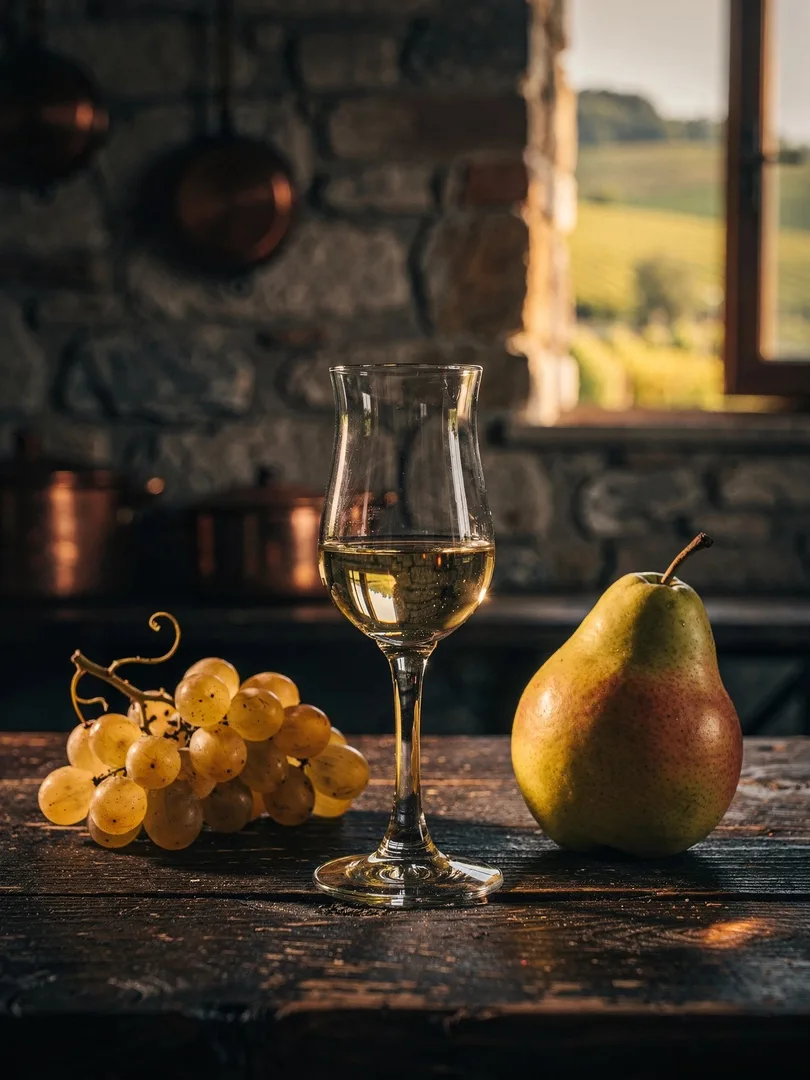
Williams friulano, the pear brandy, smells of ripe pear, juicy and soft. Kirsch Friulano is drier, with cherry stone and a touch of bitter almond when the pits have remained intact. Sliwovitz del Friuli-Venezia Giulia smells of plum and marzipan, finishing with a subtle dry edge. What they share is that fruit and grape take centre stage, with the alcohol simply carrying them.
All these spirits are typically bottled at 40 to 45 percent alcohol, with the legal minimum set at 37.5. The profile below sums up three signature spirits and shows just how close — and yet how different — grape, pear and plum can be within the same country.
Grappa friulanaPomace brandy · Pomace of Friulian Grapes
- Alcohol
- 40–45 % vol
- Maturity
- 0–5 Years
Clear, grape skin and blossom, dry on the attack, warm on the finish; Monovitigno highlights a single variety.