Nose Before Tongue
Tasting
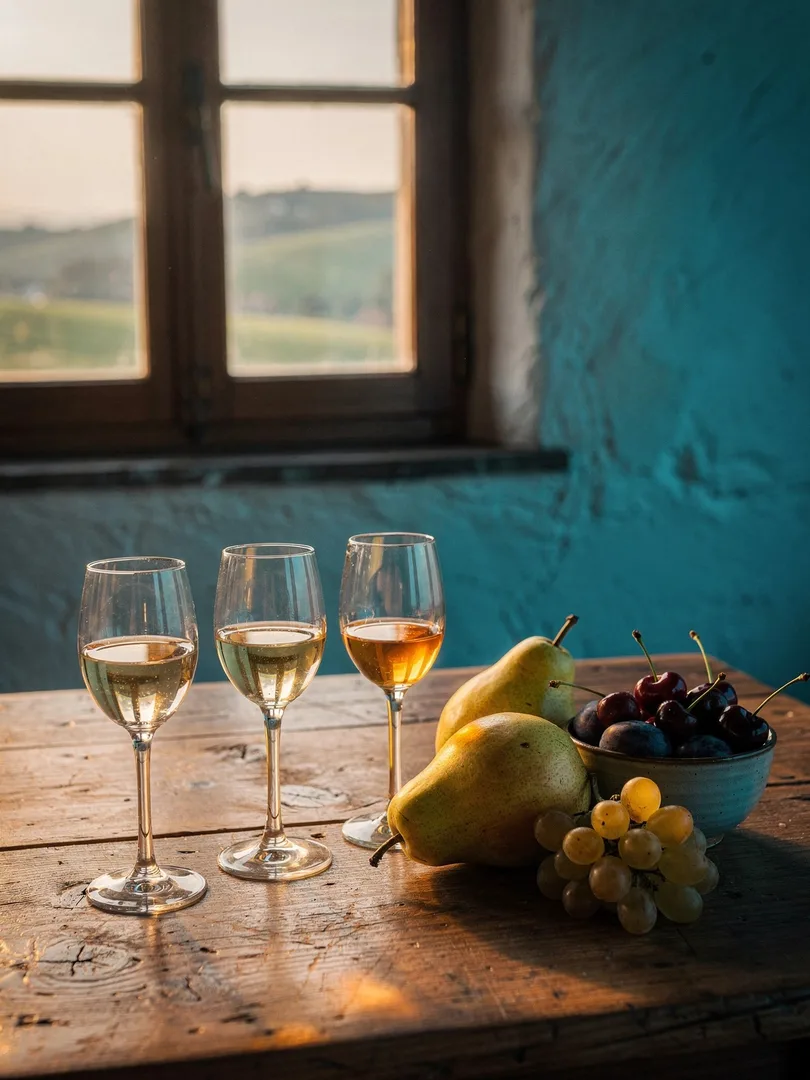
A nosing glass or a narrow, short-stemmed tulip glass shows Grappa friulana at its best, since the aromas gather beneath the rim. Pour only a small measure, nose it at length, then taste in small sips. A sip of water alongside keeps the palate fresh between spirits. A temperature around 16 to 18°C (60–64°F) is typical: too cold and the aroma closes up, too warm and the alcohol turns sharp.
A typical Grappa friulana presents a clear, dry character with grape skin, blossom and a light bitterness from the seed, leaving warmth on the finish. The younger the spirit, the fresher and sharper it tends to taste; with wood ageing it softens and takes on vanilla and spice. When tasting several spirits in succession, start with the young, clear ones before moving to the aged examples, so the bolder spirits don't overwhelm the more delicate ones.
For comparison, Nonino's range from Percoto serves well. The Grappa Tradizione represents the blend of varieties, while a Cru Monovitigno from Pignolo or Schioppettino shows how differently pomace from a red grape can smell. The Cru Monovitigno Picolit Riserva and the Antica Cuvée Riserva represent the aged side of the house.
With fruit brandies, the fruit is what counts. A Williams friulano should smell of ripe pear, not alcohol. Kirsch Friulano should carry a touch of bitter almond, and Sliwovitz a dry plum note. In all three, the fruit should come before the alcohol.
Flaws, too, can be detected by nose. A whiff of glue or nail-polish remover points to too much heads; a greasy, fusel-like note to too much tails; and vinegar to a spoiled mash. A small sip is enough to judge — but the nose matters more.