Table and Toast
Food & Tradition
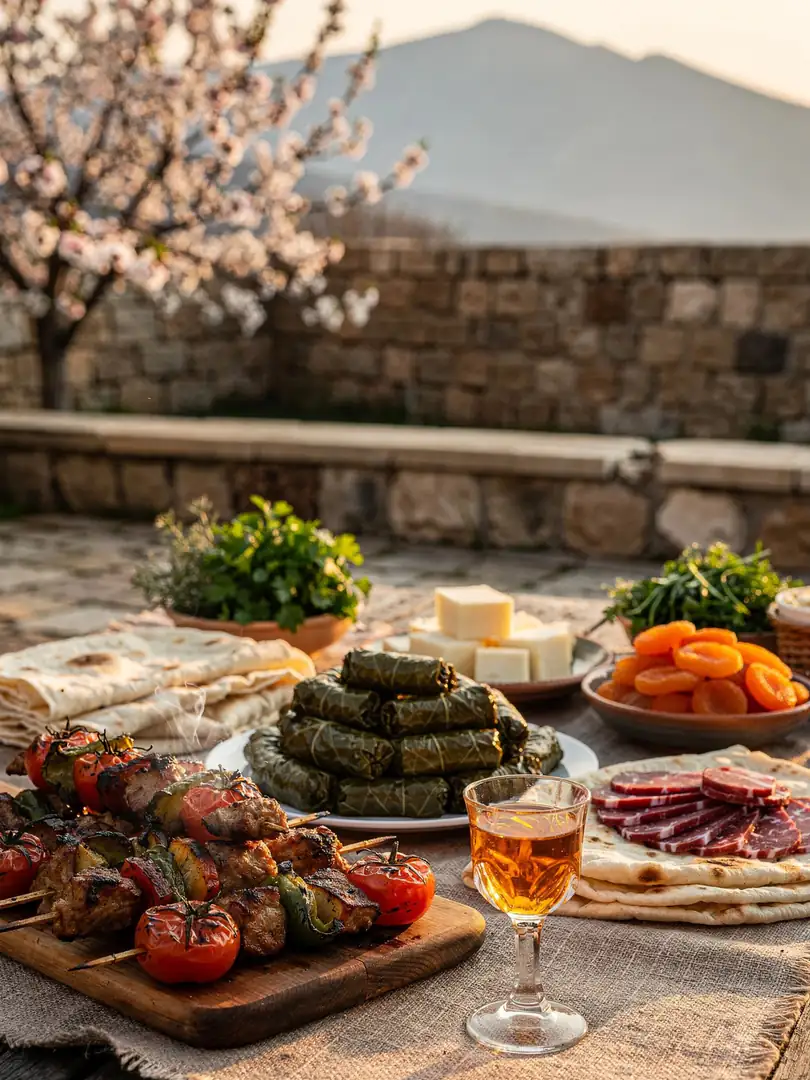
An Armenian table typically features Khorovats, meat cooked over charcoal: pork, lamb, or beef, grilled on skewers with tomatoes and peppers. The fat of the meat meets a brandy with oak and dried fruit, and the spirit cleanses the palate rather than weighing it down.
Alongside it is Tolma, grape leaves or cabbage stuffed with ground meat and rice, served with Lavash, a thin flatbread torn by hand while eating. Basturma, air-dried, spiced beef, is among the appetizers, and Oghi is served with cheese and herbs.
Dessert brings dried apricots, nuts, or Gata, a sweet pastry. Brandy here serves as a digestif, poured after the meal rather than before. Apricot brandy also pairs well, since the fruit on the plate returns in the glass. Strong coffee in small cups is often served alongside.
Oghi, by contrast, often appears right at the start of the meal, as a welcome drink with cheese, cucumbers, tomatoes, and fresh herbs. The glasses are small, and being poured a drink as a guest is a mark of honor. This hospitality creates no obligation: declining politely is fine, and no one has to drink to belong.
The toast is part of the tradition. Someone speaks a few words, going around the table, then the group raises their glasses and says "Genats," to life. Drinking happens in small sips as the conversation continues.
Anyone wanting to see the homestead distilling tradition firsthand can find it in the wine region of Vayots Dzor, where a guesthouse in Yeghegnadzor shows visitors how home distillers work. Each autumn, Areni also celebrates the harvest with a wine festival.