Brandy and Oghi
Brandy Style
Armenian brandy is, in the legal sense, a wine brandy: a wine distillate matured in oak barrels, with a minimum of 36% ABV, though usually 40% on the market. The stylistic difference from Cognac lies in the regulations. Cognac mandates grape varieties such as Ugni blanc, the Charentais pot still, a distillation deadline of March 31, and two years in oak. For Armenian brandy, there is as yet no comparable EU designation of origin, though an EU project is helping to establish one.
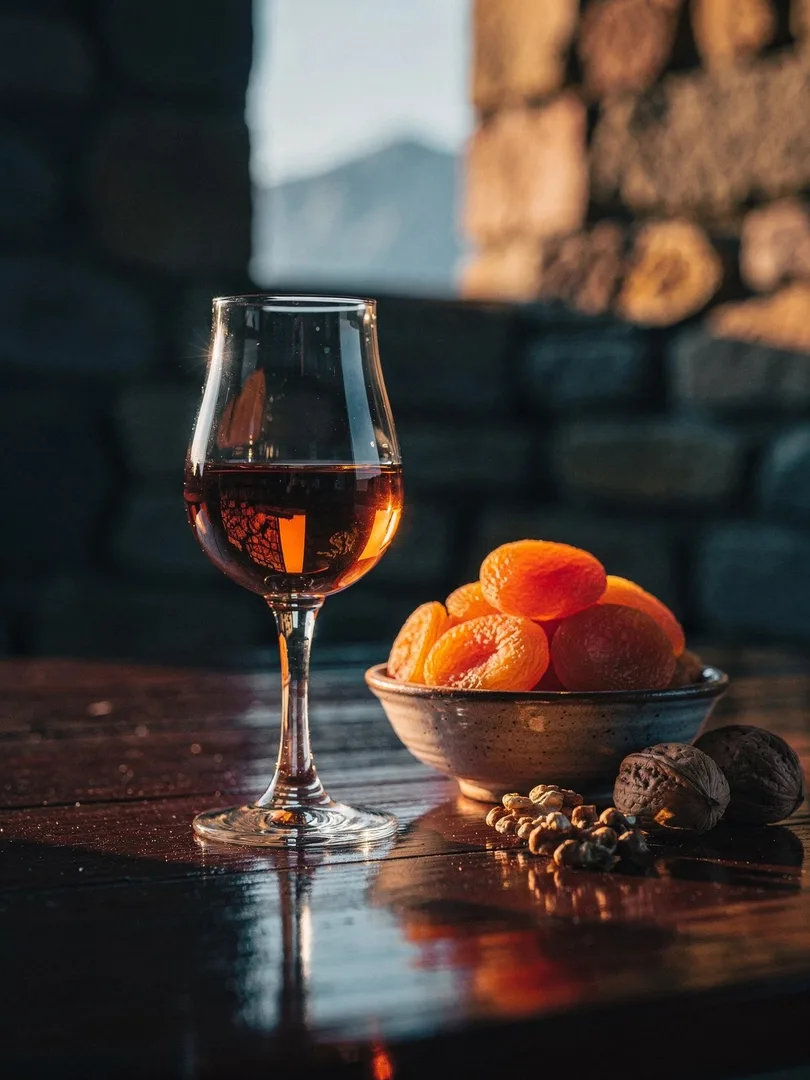
In the glass, this creates a different emphasis. Where the Voskehat and Kangun grape varieties and regional oak play their part, a mature brandy can lean toward dried fruit, nuts, and spice, while a young one still tastes of vanilla and fresh wood. This is a tendency, not a rule, since every house blends according to its own style.
The second defining spirit is Oghi. The word is often translated as vodka, but what's actually meant is a fruit brandy: Tuti-Oghi from mulberries, alongside apricot brandy, also made from plums, pears, or figs. As a fruit brandy, it is fermented fruit that has been distilled. In German, apricot brandy is also called Marillenbrand — the same principle, with a different name for the fruit.
A fruit spirit (Obstgeist), by contrast, works differently: unfermented fruit is macerated in alcohol, and the macerate is then distilled. Oghi does not belong to this category, since it comes from fermented mash and is therefore a fruit brandy with full fruit character. Under EU law, both categories require a minimum of 37.5% ABV. A fruit spirit may contain at most 10 grams of sugar per liter, while fruit brandy may contain up to 18.
Setting both side by side means tasting two sides of the same country: the amber-colored brandy from Yerevan and the clear Oghi from the homestead.
Armenian BrandyWine and grape brandy · White wine grapes, including Voskehat
- Alcohol
- 40 % vol
- Maturity
- 3–15 Years
Amber, oak, and dried fruit, round and mellow; the character deepens with years in the barrel.