Chacha and Brandy
Spirit Style
Is there such a thing as Georgian Cognac? Not as a name anymore, but as a memory, yes. For about a century, from the 1890s into the 1990s, Brandy was called Cognac in both Georgian and English. Today it's called Brandy, since Cognac is a name protected within the EU, reserved for wine spirits from the Charente region of France. On old labels and in stories, the word still turns up—as history, not as today's designation.
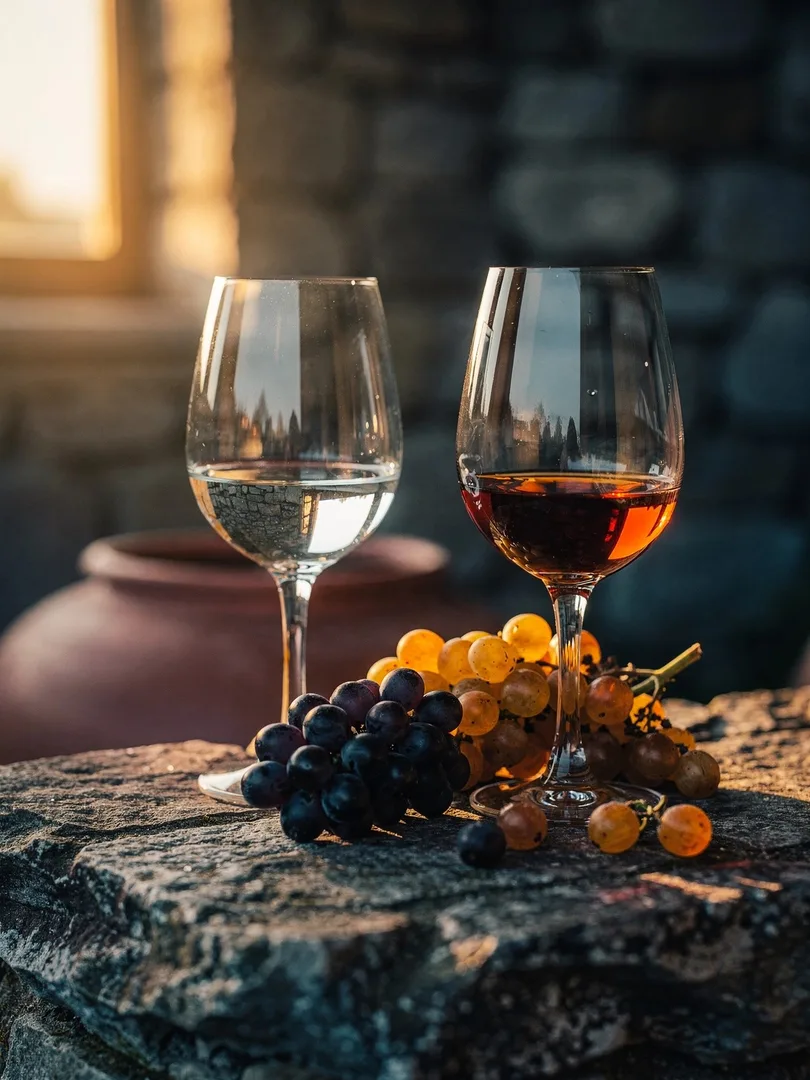
In the glass, Georgian Brandy appears amber-colored, with notes of vanilla, dried fruit, and nuts; older bottlings add honey and spice. Where it's sold in the EU, it falls under Brandy or wine spirit: it's made from wine and has rested in oak. Among the best-known names is Eniseli, a brand from the house of Sarajishvili, credited to house technologist Vakhtang Tsitsishvili in 1943.
Chacha, by contrast, pours clear into the glass and smells of grape skin, fresh must, and sometimes herbs. On the palate it's dry and powerful, a spirit with edges that doesn't aim to please. Saperavi pomace usually brings more fruit and tannin, while Rkatsiteli pomace tends to taste leaner. In Georgian, the word Chacha refers both to the spirit and to the pomace it's made from. Strength is usually between forty and a bit over fifty percent, though home-distilled versions can run considerably higher.
Compared with Italian Grappa, Chacha stands apart mainly in its origin: it comes from the pomace of Qvevri wines, often stems included, and is frequently distilled at home rather than as a branded product. Between the two spirits lies a clear contrast: Brandy is smooth, warm, and wood-driven, while Chacha is sharp, clear, and grapey.
ChachaPomace brandy · Grape pomace, often Rkatsiteli, Saperavi
- Alcohol
- 40–55 % vol
- Maturity
- 0–1 Years
Clear and dry, grape skin and herbs, powerful and edgy on the finish.