Crushed, Fermented
Mash & Fermentation
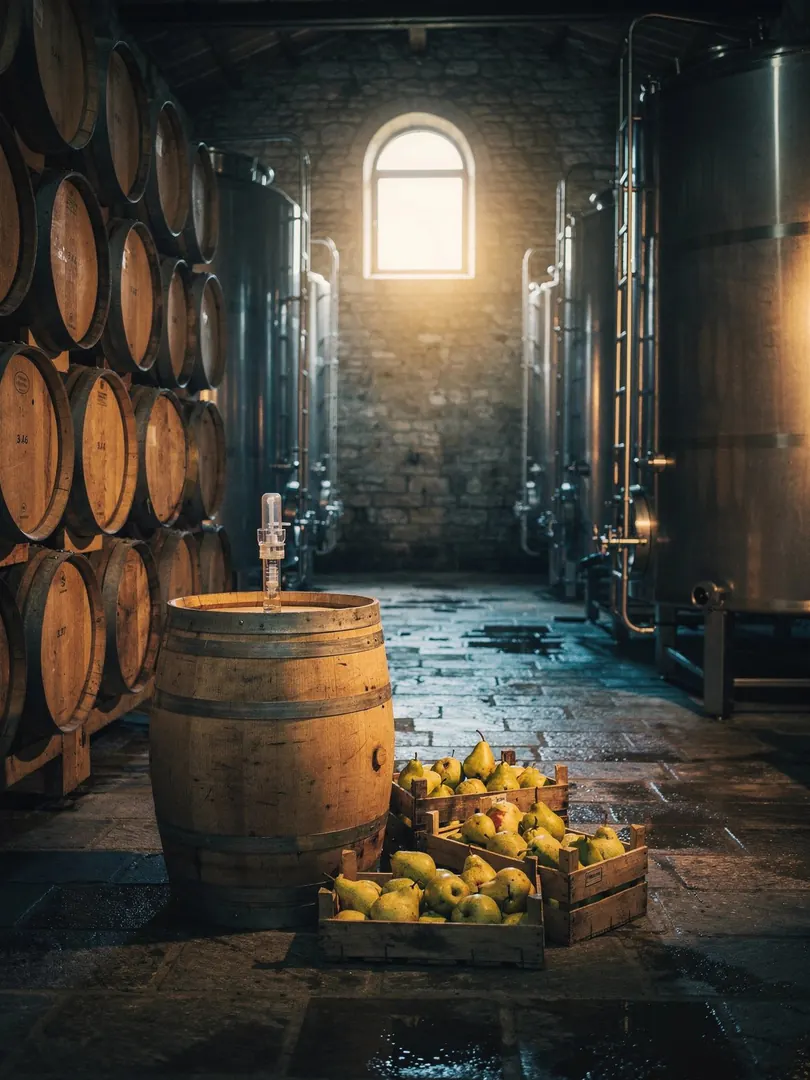
Fresh pears only become brandy once they have fermented into a mash. The fruit is crushed for this, and the flesh stays in the vessel along with juice and skins. With stone fruit, the pits are kept as whole as possible, since crushed pits release hydrocyanic acid, of which the EU permits only trace amounts.
After that, the yeasts take over. They convert the fruit sugar into alcohol and carbon dioxide, the mash begins to foam and smells of fruit and yeast. How long this takes depends on the fruit, the temperature and the yeast. For comparison: in the Hausruckviertel, the Hausruck pear-apple perry ferments for six to eight weeks, according to the Ministry of Agriculture, reaching around 6% ABV.
A distiller works with mash, a perry maker with pressed juice — that is the key difference. Perry is made using a hydraulic press, whereas mash contains the whole crushed fruit. If finished pear perry is distilled, EU regulations assign the result to its own category, brandy from apple and pear wine. That is also where Calvados belongs.
Fermentation also produces methanol. It comes from pectin, a substance in the fruit's cell walls, and forms already in the mash. That is why the EU sets upper limits: 1,200 grams per hectoliter of pure alcohol for pear brandy, 1,350 for Williams pear and quince. Methanol only becomes a problem in adulterated alcohol, not in a legally produced brandy from Upper Austria.
Cleanliness determines the quality of the mash. Rotten or moldy fruit introduces off-flavors that remain in the finished brandy. That is why distillers sort their fruit before it goes into the fermentation vessel, and keep the mash tightly sealed so it doesn't turn to vinegar.