Glass, Steel, Oak
Maturation & Storage
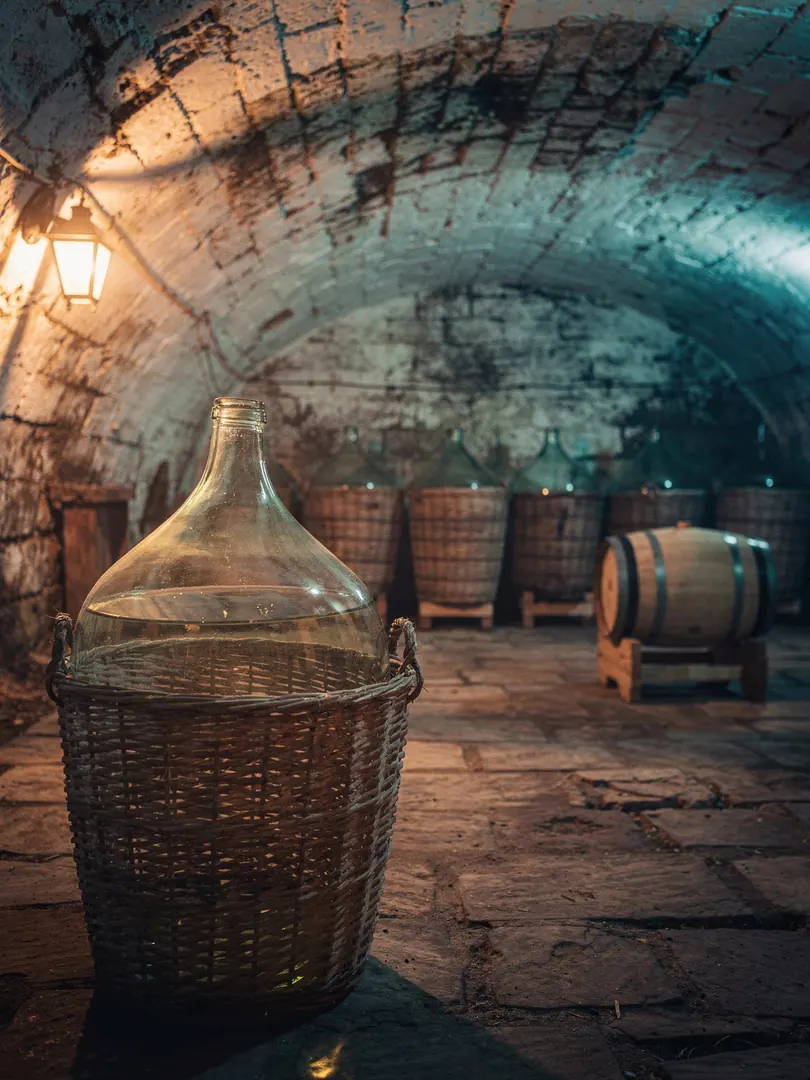
Do fruit brandies actually mature, and if so, where? Most rest after distillation in glass demijohns, stainless steel tanks or stoneware, since these vessels impart no flavor of their own to the brandy. Wood is permitted but used less often. If a brandy has had at least a year of contact with wood, EU law allows it to be colored with caramel coloring. Otherwise, coloring is prohibited.
Alongside its clear range, Reisetbauer also produces an apple brandy aged in oak barrels. The wood colors the brandy and brings vanilla and spice notes that a clear brandy lacks. How long the barrel is needed is up to each producer. The fruit should still take center stage, with the wood only accompanying it, never masking it.
The EU sets no minimum age for fruit brandy. If an age statement nonetheless appears on the label, it must refer to the youngest component, and maturation must have taken place under official supervision. A blended brandy is therefore only as old as its youngest component.
Freshly distilled, a fruit brandy often seems sharp and unsettled. A few months of rest let the aromas come together, and the brandy becomes rounder. For stone fruit brandies, authorities advise against storing them in bright light, since hydrocyanic acid can turn into ethyl carbamate under light exposure, a substance suspected of being carcinogenic. Anyone storing brandy at home should therefore keep the bottle upright, cool and dark.
Axberg's range also includes a whisky, which matures quite differently from the fruit brandies. With whisky, the cask contributes a large share of the color and aroma. How that works is explained in the article on cask maturation in whisky.