Edelbrand and Obstschnaps
Brandy Style
What is the difference between Edelbrand and Obstschnaps? In Austria, the Codex Alimentarius, Chapter B 23, defines Edelbrand as a distillate from fermented mash that has retained its aroma. If up to a third is agricultural alcohol — neutral alcohol from agricultural raw materials — the product is called Obstschnaps (fruit schnapps). The EU does not recognize Edelbrand as a category at all; its fruit brandy may contain no added alcohol.
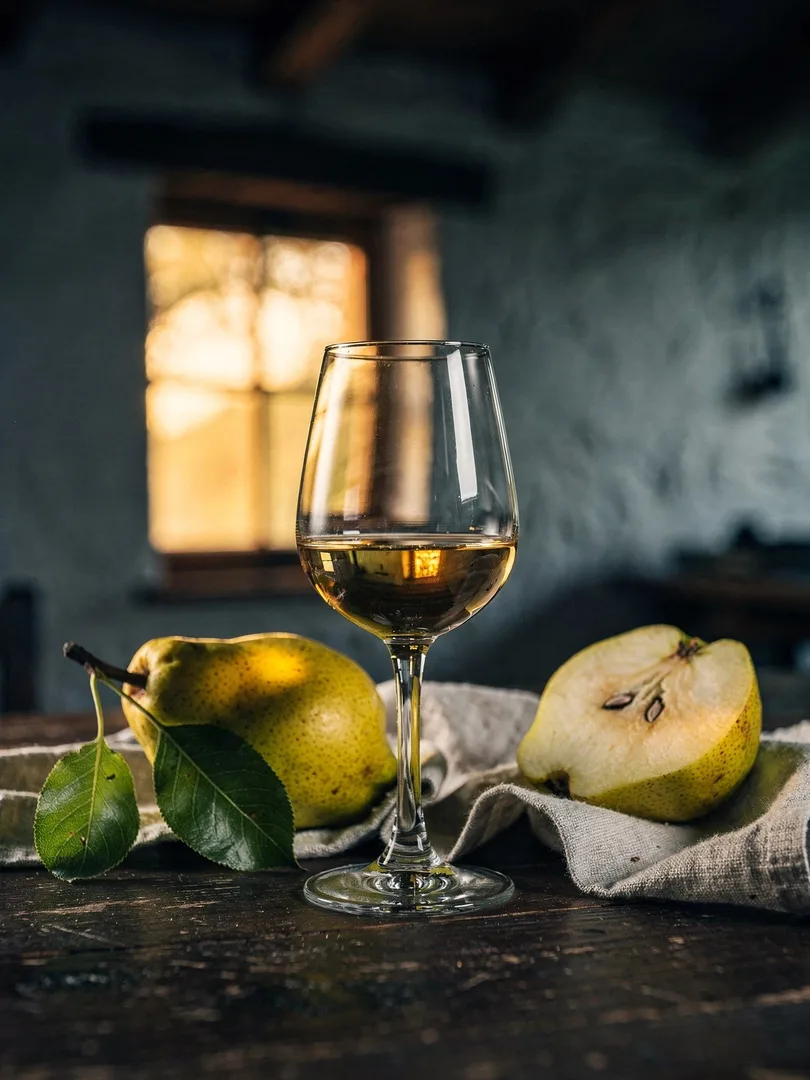
The Williams pear brandy is the classic of the Reisetbauer estate, the one with which the first bottling began in 1995. It has an aroma of ripe pear and feels soft and juicy on the palate. Because it is made purely from the Williams pear, it is entitled under EU law to be called Williams.
The quince brandy tastes more tart and spicy. Falstaff describes Reisetbauer's version as having a nose of pome fruit with slightly ethereal notes, and fine black pepper on the palate. The fruit is naturally rich in tannins, which gives the brandy its bite.
From the Hausruck pears comes the perry pear brandy, a farmhouse craft product even though no name is protected. Perry pears are smaller, harder and more tannic than Williams, so their brandy tastes more tart and fruity. It differs from Wachauer Marillenbrand in that it carries no EU designation of origin.
And what is an Obstler? It is a fruit brandy in which at least 85 percent of the mash comes from apples or pears. Up to 15 percent other fruits are permitted. A pure Williams pear brandy is therefore not an Obstler, and an Edelbrand need not be one either.
Williams Pear BrandyFruit brandy · Williams pears
- Alcohol
- 40–43 % vol
- Maturity
- 0–2 Years
Glass-clear, ripe juicy pear on the nose and palate, soft on the finish.