Nose and Palate
Tasting
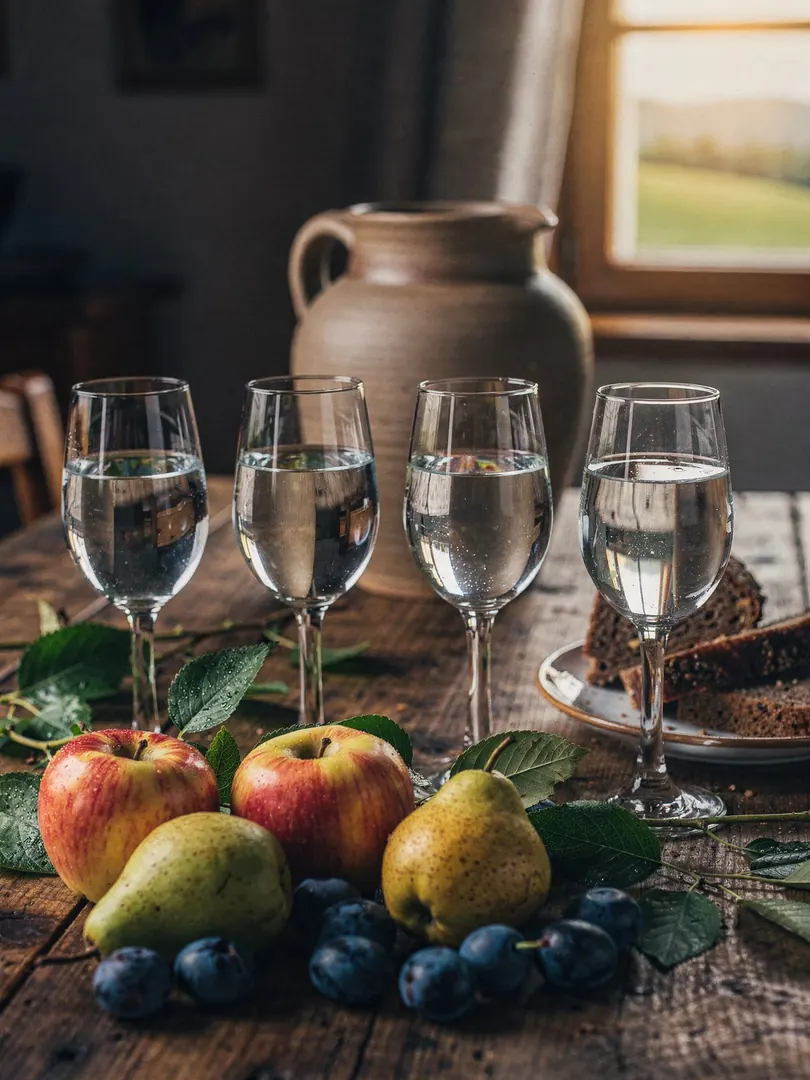
A nosing glass or tulip-shaped glass shows a Styrian fruit brandy at its best, since the narrow bowl concentrates the aroma. The brandy should be enjoyed cool to room temperature in the glass, not chilled straight from the fridge, since cold mutes the aroma. Smell first, then take a small sip and let the brandy spread briefly across the palate.
According to the register, Styrian Hirschbirne Brandy has an intense, youthful pear aroma, with a tart, almost green note reminiscent of bell pepper. On the palate, plenty of freshness comes through. Among the four register-listed brandies, this is the one where variety and landscape are most closely linked.
One example of a house's signature style is Gölles in Riegersburg: according to the house, it produces pear, apricot, plum, and apple brandies without sugar, flavorings, or colorings. Tasting several side by side reveals just how differently fruits can express themselves in the glass.
With the two apple brandies, a side-by-side comparison is worthwhile: Maschanzker and Kronprinz Rudolf are two varieties with their own histories, and the nose quickly notices that one apple brandy doesn't smell like the other. It's important to drink water between glasses and give your nose a rest.
With Styrian Kriacherl, the nose first seeks out the plum, then the subtle stone-fruit note. A well-made brandy keeps this note subtle; too strong a note is considered a flaw. A few drops are enough for proper assessment. A rowanberry brandy stands apart from the others: whether it was fermented or macerated is revealed on the front label, and this explains differences in aroma.