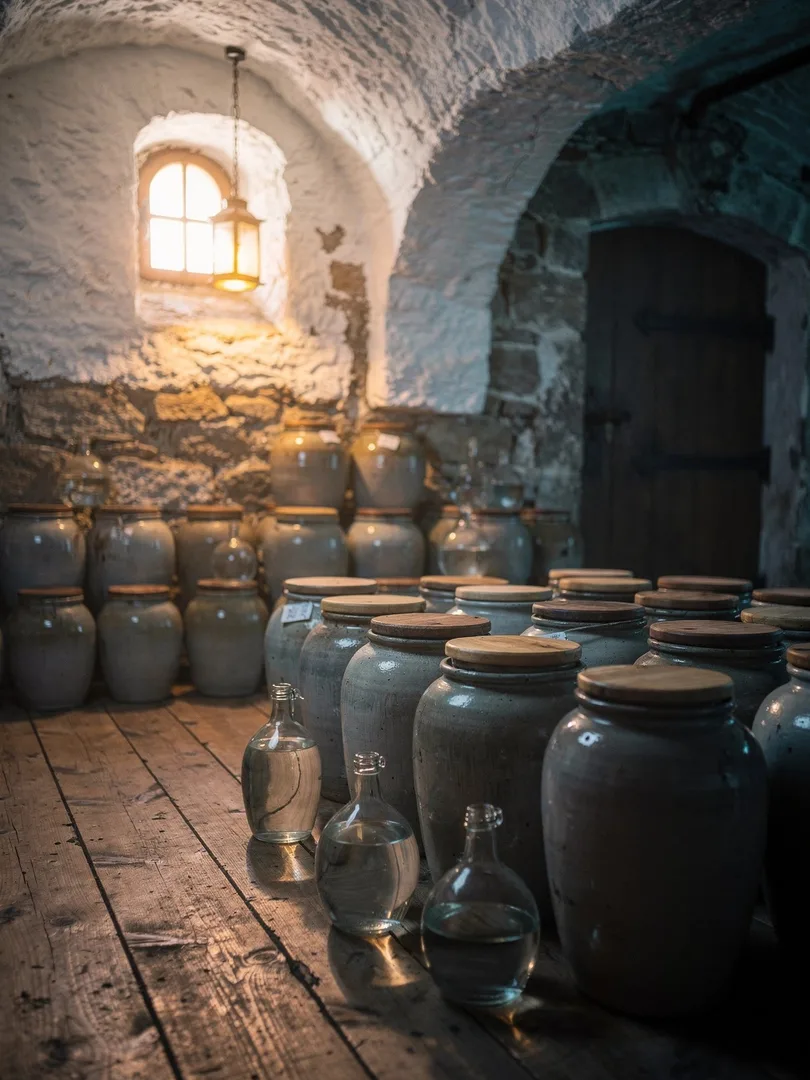
Stoneware and Time
Maturation & Storage
A freshly distilled fruit brandy is rough and needs time to rest. In Tyrol it's usually kept in stoneware vessels or glass demijohns, where it matures without picking up wood flavor. Vogelbeerbrand is often said to mature in stoneware for up to three years before its aroma fully develops. During this time, the initial harshness fades and the brandy rounds out.
Rochelt states that its brandies mature for years and reach the bottle as unfiltered distillates. This is the house's own claim, and it shows how this producer works: here, time takes the place of technique. Stoneware and glass impart no flavor of their own, so the character of the fruit or root remains unaltered.
EU law sets no minimum maturation period for fruit brandy. Coloring is prohibited, and caramel coloring may only be added if the brandy has matured in wood for at least one year. If you see a fruit brandy that's perfectly clear, you're looking at one with no wood contact—or simply one with no added color.
Pregler is poured clear and colorless into the glass. This is fixed in the rules of the Food Codex Commission. Krautinger likewise stays colorless. The wooden cask is the exception in Tyrol, even though some distillers do age certain brandies in barrels.
Age statements like those on Cognac bottles don't exist for Tyrolean brandies. The year of bottling or the maturation time appears, if at all, only as a voluntary note on the label. Anyone wanting to know how long a brandy has rested is best off simply asking the distiller, since they know every vessel in their cellar.