Cherries with the Stone Left In
Mash & Fermentation
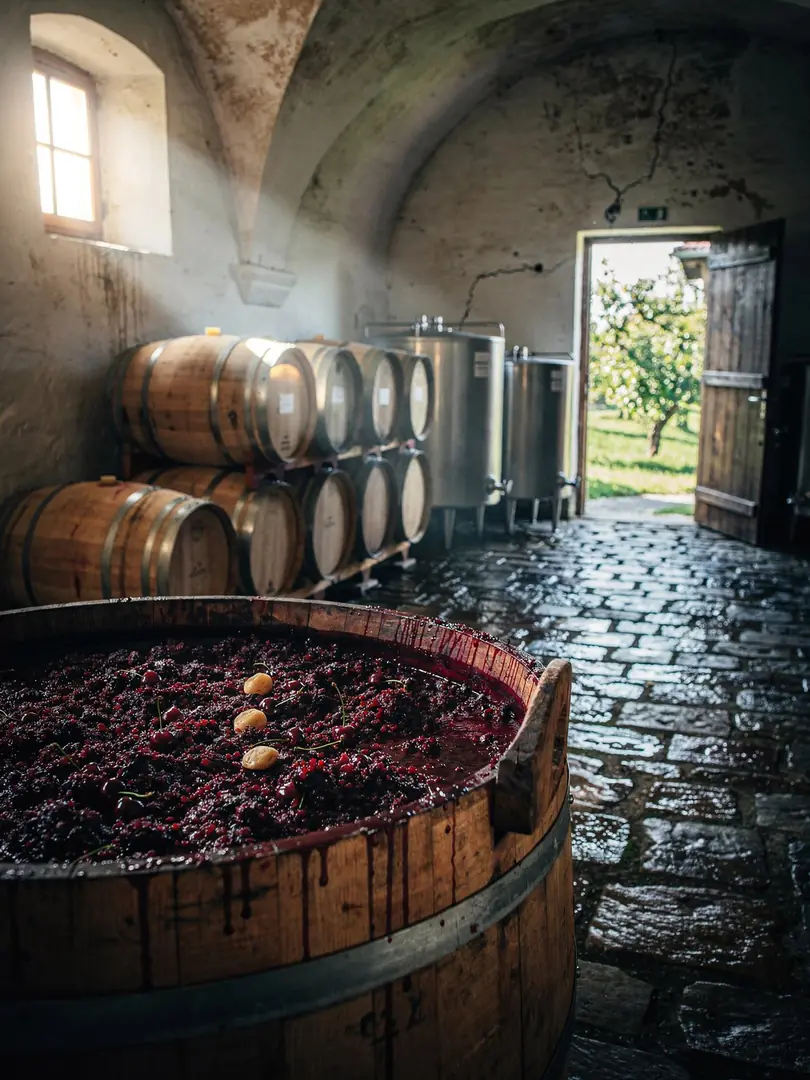
Cherry brandy begins with fermentation. The fruit, flesh and all, goes into a barrel or tank, gets crushed, and forms the mash. With cherries, the stones usually stay in, since they lend the brandy a subtle note of bitter almond.
That note is a balancing act. Crushed pits release hydrocyanic acid, which the EU limits to 7 grams per hectoliter of pure alcohol in stone fruit spirits. Exposure to light can also turn it into ethyl carbamate, a substance viewed critically by Germany's Federal Institute for Risk Assessment. The goal is only a subtle stone note, never a harsh one that tastes like marzipan from a tube.
Yeasts convert the sugar in the cherries into alcohol, either natural yeasts from the fruit skin or added cultured yeasts. This takes several weeks. After that, the mash must be distilled soon, or it develops acetic acid and the resulting brandy tastes dull.
In Fraxern, distilling takes place in December. Between harvest and distillation, the mash sits in sealed containers, and it's during this time that the cleanliness of the aroma is determined. Careful distillers keep the cellar cool and the barrel tightly sealed. Fraxner Kriasiwasser comes from fruit harvested in high summer but not distilled until winter. Even at the mashing stage, distillers pay close attention to cleanliness, since a dirty vessel or a leaky barrel is enough to ruin an aroma.
If cherries were instead left unfermented in neutral alcohol, the result would be a geist, not a kirschwasser. This process is called maceration and suits low-sugar fruits like raspberry or sloe. Cherries contain enough sugar to ferment on their own, yielding a true fruit brandy.