Distilled Twice
Distilling
According to local sources, Fraxner Kirsch is double distilled. The first run produces the raw spirit, a cloudy, low-strength distillate in which alcohol and aroma from the mash are concentrated. It is heated again and separated into fractions during this second pass.
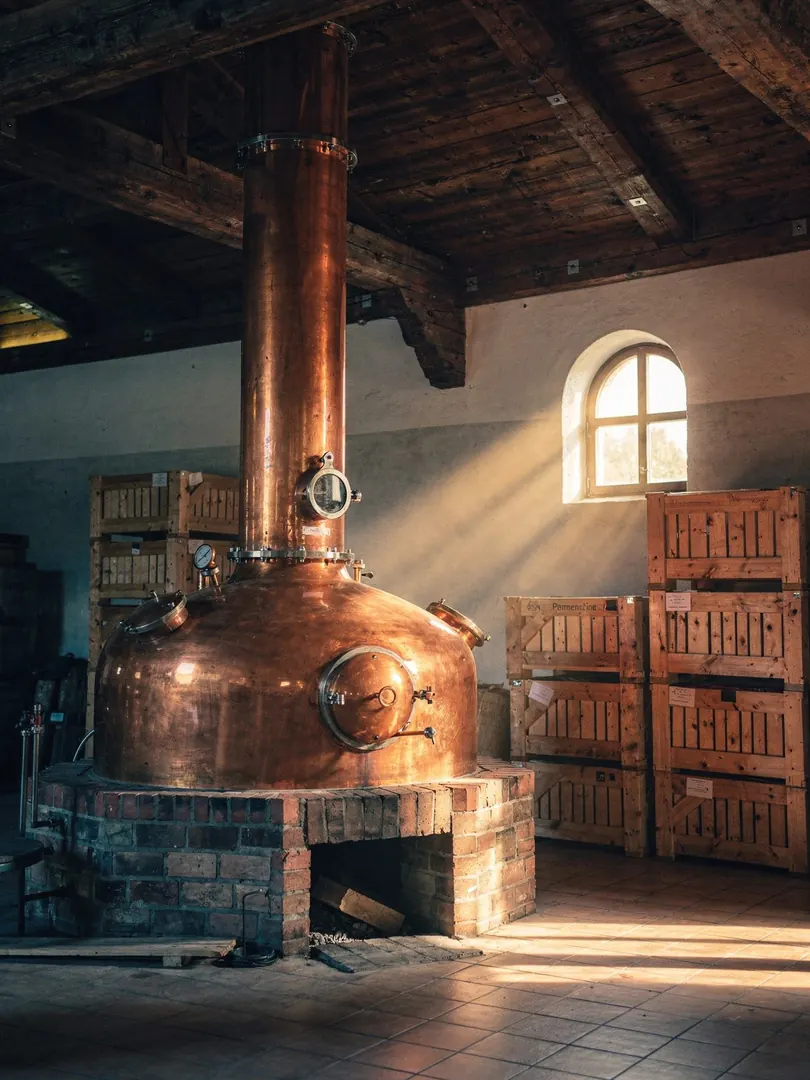
These fractions are called heads, hearts, and tails. The heads contain volatile compounds that smell sharp and solvent-like. The tails bring heavy, oily notes. The distiller keeps only the heart, judging by smell and temperature where to make the cut. The still is made of copper, since the metal binds unwanted sulfur compounds and distributes heat evenly. To prevent scorching, the mash is heated gently.
One common misunderstanding is worth clearing up. Methanol comes from pectin in the fruit and forms already in the mash, not during distilling itself. Cutting off the heads only partially reduces it. That's why maximum limits exist — for cherry brandy, 1,000 grams per hectoliter of pure alcohol.
The Prinz distillery in Hörbranz describes its spirits as double distilled. The house also mentions a vacuum distillation method, carried out at lower temperatures so that delicate aromas remain subtle.
None of this is meant as a how-to guide for distilling, nor should it be read as one. Anyone distilling in Austria needs to register with the customs office, and those running a compensation distillery need the corresponding license. Working with copper stills especially demands experience that can't be learned from a paragraph.