Clear in the Glass
Tasting
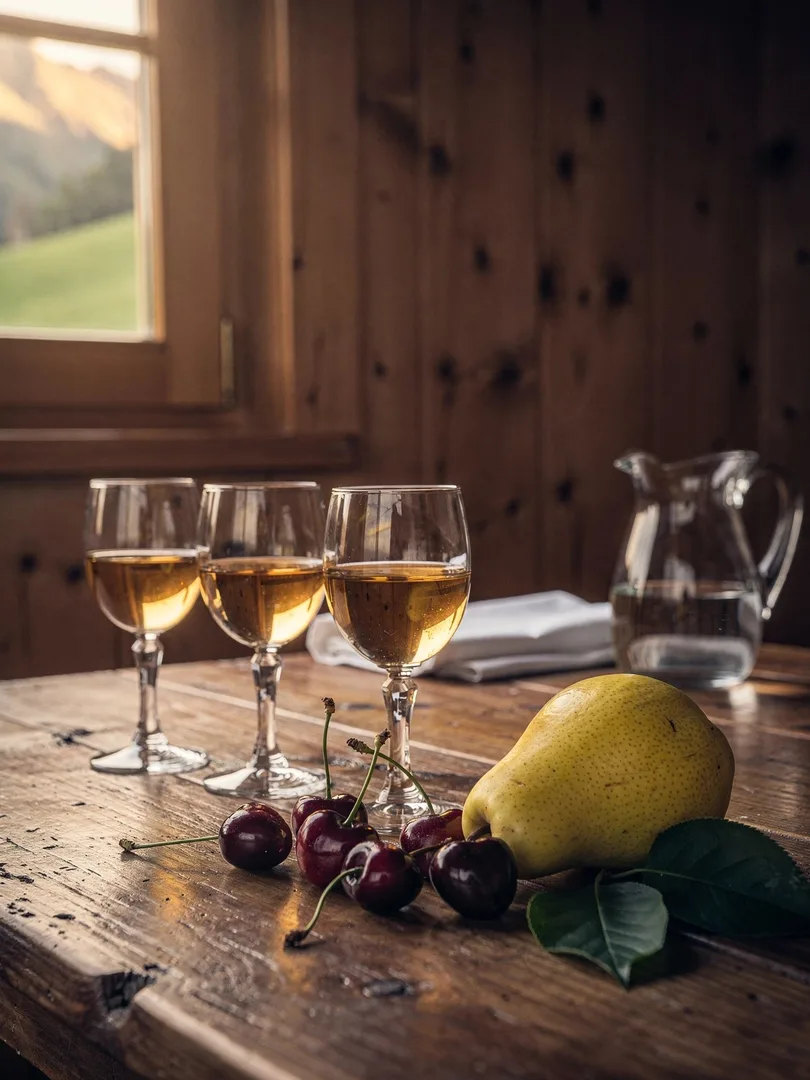
A fruit brandy from Vorarlberg is first smelled, then tasted. A nosing glass or a small tulip glass captures the aromas in the bowl while the narrow rim concentrates them. The glass should only be filled partway, so the aroma can collect above the liquid, and it shouldn't be warmed in the hand.
Serving temperature should be room temperature or slightly below. Cold hides a brandy's aroma, so neither ice nor chilled glasses are used. On the first sniff, keep some distance, since at 40 percent ABV the alcohol can sting the nose quickly.
Fraxner Kirsch smells of ripe cherry, with the stone note emerging in the background. On the palate it's dry, not sweet, since fruit brandy is a dry spirit, not a liqueur. This is followed by a warm finish that lingers pleasantly.
Good examples include the Williams from the private Hämmerle distillery in Lustenau and the brandies from Prinz in Hörbranz, such as Kirsch, Williams, or apricot brandy. For comparison, try the clear Williams first, then the Kirsch, since the pear comes across softer and the cherry's stone note more bitter.
A single sip is enough for tasting. Roll it briefly in the mouth, swallow, then take a sip of water to cleanse the palate. Between two brandies, a piece of bread, a sip of water, and a little patience help reset the palate. When comparing, note color, aroma, mouthfeel, and finish in sequence, and later you'll be able to say which brandy felt warmer, softer, or drier.