Kirsch and Williams
Brandy Style
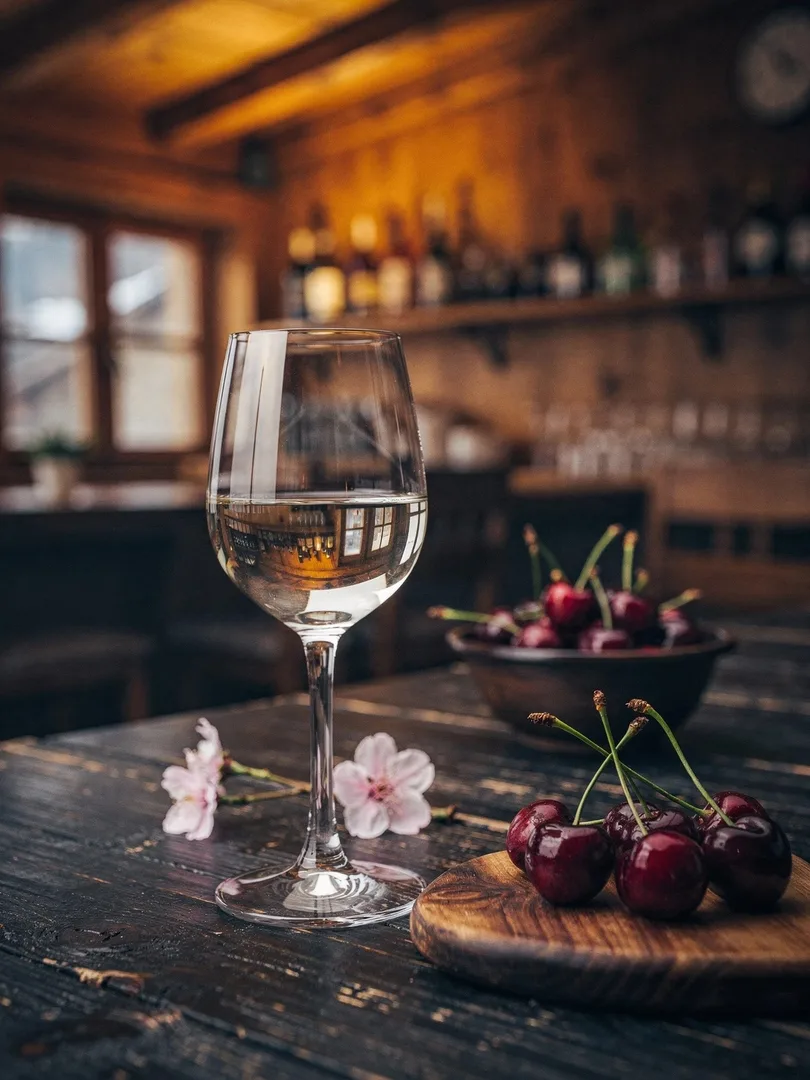
The region's flagship spirit is Fraxner Kirsch. It comes from sweet cherries grown on standard trees on the south-facing slope, is double distilled, and bottled at 40 to 45 percent ABV. In the glass it's clear, and the nose shows ripe cherry and a subtle stone note.
The main difference from Schwarzwälder Kirschwasser lies in the origin of the fruit. There, the cherries come from small, old varieties of distilling cherries and have carried an EU geographical indication since 1989. In Fraxern, village varieties like the Klennzweiete supply the fruit, and the name is protected through the register of traditional foods.
The second flagship spirit is the Williams. The name is protected under spirits regulations: only a brandy made exclusively from Williams pears may carry that name. From Lustenau it comes from the private Hämmerle distillery, and Prinz in Hörbranz also produces a Williams.
On the label, a cherry brandy may also simply be called 'Kirsch' or 'Kirschwasser'; the EU allows both terms. Tasting the two brandies side by side, you notice the difference between stone fruit and pome fruit: with Kirsch, the stone contributes part of the character, while with the pear, it's the juicy flesh alone. Both brandies are fruit brandies under EU law, meaning they're made from fermented fruit without any added neutral alcohol. Unlike a geist, where unfermented fruit sits in neutral alcohol, a fruit brandy carries the aroma of the fruit itself. Together, these two brandies show just how differently mountain slope and valley can taste in Vorarlberg.
Fraxner KirschFruit brandy · Sweet Cherries from Standard Trees
- Alcohol
- 40–45 % vol
- Maturity
- 0–1 Years
Crystal clear, ripe cherry and a subtle stone note, dry and warm on the finish.