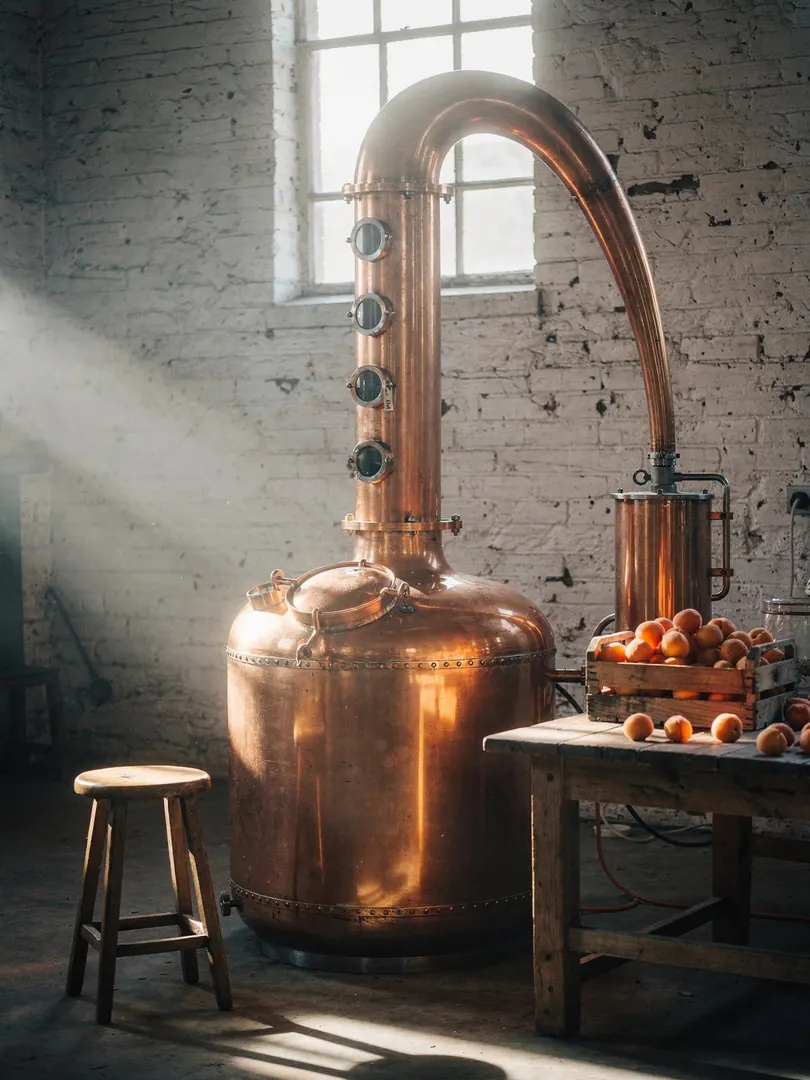
Pot Still, Not Column
Distilling
How is apricot brandy distilled? According to the rules for Wachau apricot brandy, in simple pot stills or stills with a rectifying column, but never continuously. Each distillation run ends below 86% ABV, so that the fruit's aroma is preserved and no neutral alcohol is produced.
The principle is ancient: the mash is heated in a copper pot, the alcohol vaporizes before the water does, and the vapor condenses back into liquid in the cooler. A rectifying column, an attachment on the pot, concentrates the vapor once more before it's cooled. The result is a clear distillate with pronounced fruit aroma.
Continuous means that a system runs non-stop, with fresh mash constantly flowing in. For Wachau apricot brandy, this is ruled out, since it's incompatible with traditional production under the specification. Distilling is done in individual runs, one pot at a time.
Separation is what matters most. First comes the heads, volatile and sharp-smelling, then the heart, the actual core of the spirit, and finally the tails, with heavy, fusel-like components. The distiller decides by nose and taste where the heart begins and ends. This also reduces methanol, but only partly, since some of it carries over regardless.
The fact that no step-by-step instructions are given here is deliberate. Distilling without a license is illegal, and cutting the runs incorrectly makes a brandy harsh or unpalatable. Legally, only licensed farmers and distilleries under tax supervision may do this work.