Fruit Pulp and Yeast
Mash & Fermentation
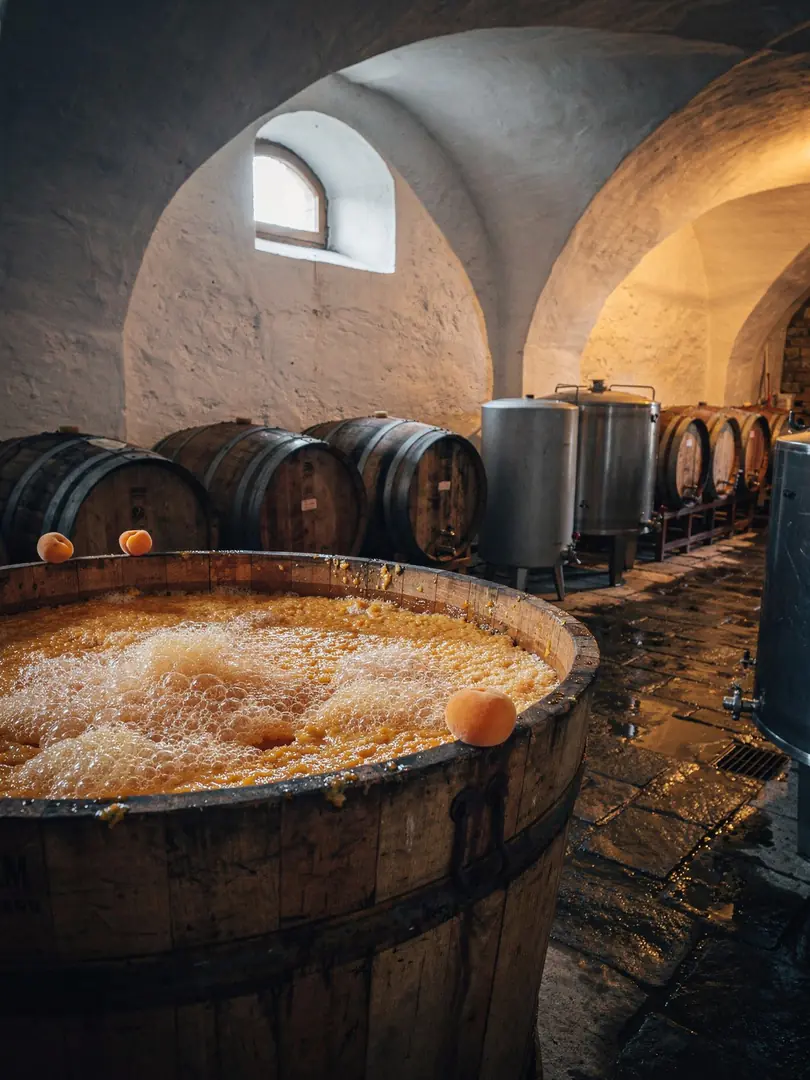
Apricot brandy begins with the mash, the fruit pulp in which the sugar of the apricots turns into alcohol. Because the fruit is so rich in sugar, it ferments well on its own and needs no detour through a geist, where unfermented fruit is steeped in alcohol.
Before mashing, the fruit is usually pitted. If the pits are left in, the fruit is crushed gently so they aren't broken. The reason is practical: crushed pits release hydrocyanic acid, which can turn into ethyl carbamate when exposed to light. A subtle hint of kernel, a touch of bitter almond, belongs in Wachau apricot brandy—too much of it is a flaw.
Then the yeast takes over. It converts the fruit sugar into alcohol and carbon dioxide, the mash foams and smells strongly of apricot. Mash containing pits is only briefly stored after fermentation before distilling, and the settled pits are kept out of the still.
Fermentation also produces methanol. It comes from the fruit's pectin, and apricots contain plenty of it. Every fruit brandy therefore contains methanol, and EU regulation sets an upper limit of 1,200 grams per hectoliter of pure alcohol for apricot brandy. The idea that you can go blind from fruit brandy applies to adulterated alcohol, not to apricot brandy that stays within these limits.
At the end of fermentation, what remains is a thin, watery pulp with some alcohol, carrying apricot aroma but hardly any flavor worth drinking. Only distillation separates the alcohol, together with the aroma, from the rest. It's later diluted to drinking strength with water—in the Wachau, according to the specification, with soft regional water or demineralized water.