Danube and Apricot
Region & History
Wachau apricot brandy has been protected as a geographical indication by the EU since Austria's accession in 1995, and it may only be produced in 21 municipalities. These include Spitz, Weißenkirchen, Dürnstein, Rossatz-Arnsdorf, Mautern and Krems, plus fifteen more municipalities around the Danube Valley. So if you're holding a bottle from Bavaria or Hungary, it's not a Wachau product, even if the fruit is the same.
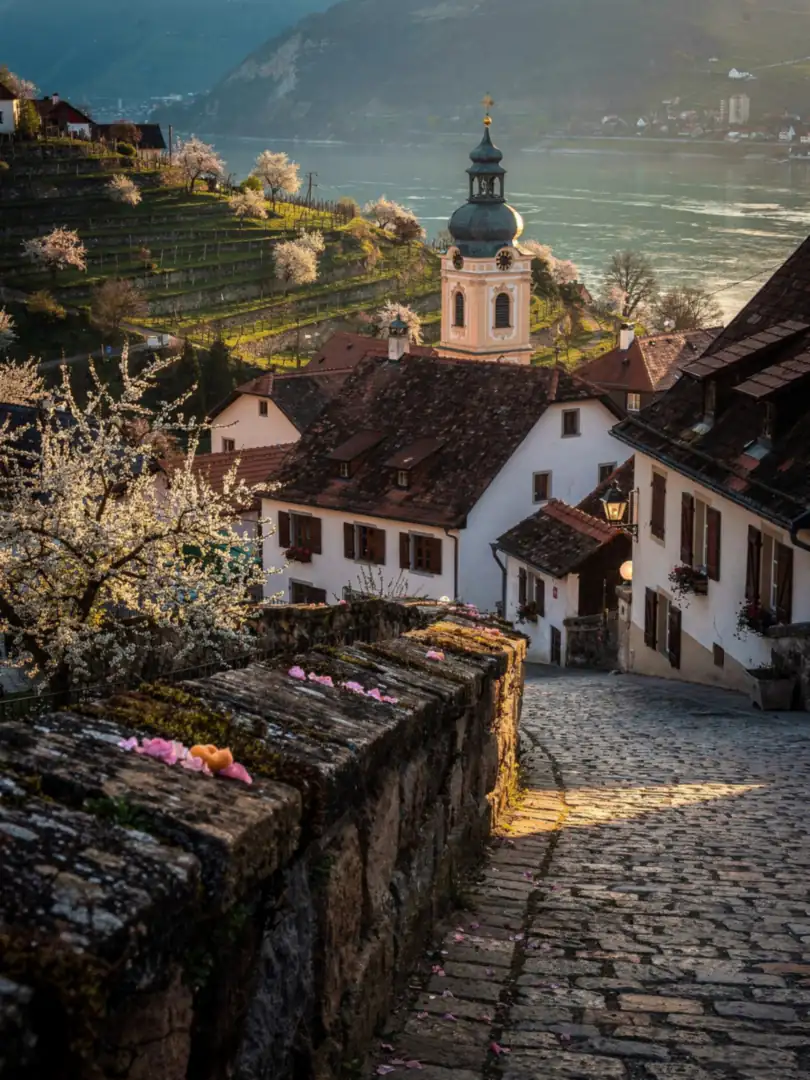
The fruit is older than the brandy. The Starhemberg Archive in Eferding documents apricot cultivation in the Wachau as early as 1509. It really took off around 1890: phylloxera had destroyed vineyards, and farmers needed a second source of income. Ever since, apricot trees have stood between the vines and the Danube.
Distillation itself came from monasteries and apothecaries in the Middle Ages, where it was known as a remedy under the name aqua vitae. Over time, the medicine became a pleasure, and in the Wachau the raw material lay right at hand: the apricot.
Three names are often confused. The Wachau apricot is the fruit itself, protected as a PDO since 1996. Wachau apricot brandy is the distillate made from it, with a minimum of 38% ABV and no more than 4 g of sugar per liter. Wachau apricot liqueur, finally, is a liqueur—meaning it's sweetened—and therefore doesn't count among the brandies. A fourth name stands alongside these: Wachau brandy has also been protected since 1995, but it's distilled from wine, not fruit.
Today, distilling takes place at Domäne Wachau, at the Bailoni distillery in Krems, and in many small operations run by winegrowers and fruit farmers. Anyone wanting to distill apricots in their own still needs official permission. Distilling without a license is illegal, even in Austria.