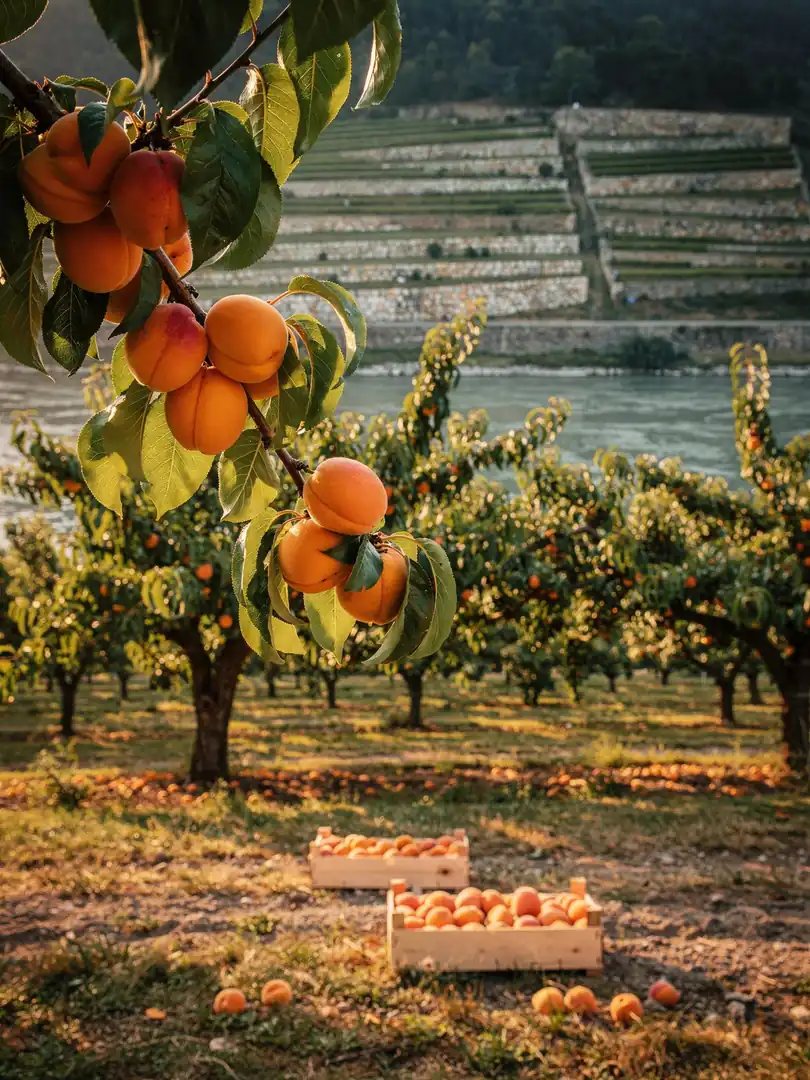
Klosterneuburg Apricot
Fruit & Raw Material
The Klosterneuburg apricot is the variety on which Wachau apricot brandy is predominantly based, bred through selection between 1900 and 1960. It brings plenty of sugar, acidity and pectin, along with a spicy, fresh aroma. The sugar later becomes alcohol, and the aroma is meant to come through again in the glass.
The trees bloom in pale pink and white in late March and early April. The apricot blossom draws visitors to towns like Weißenkirchen, and it's also the riskiest moment of the fruit-growing year, since a late frost during this time can cost a large share of the harvest.
Harvesting takes place in July, by hand and in several passes. Pickers go through the same trees up to five times a year, so that only fully ripe fruit ends up in the crates. It's painstaking work, but crucial for the brandy: unripe apricots have neither enough sugar nor enough aroma. Ripe apricots, on the other hand, are delicate and don't keep long, which is why the fruit destined for brandy goes into the mash soon after harvest, while the aroma is still fresh. Whatever is needed for eating fresh, jam or nectar goes to other buyers, and the distiller gets the fruit needed for fermentation.
The fruit carries its own protected designation of origin. The Wachau apricot has been a PDO since 1996, and its quality is attributed to the region's climate, soil, traditional varieties, and more than a hundred years of cultivation. Wachau apricot brandy is distilled from fully ripened fruit of this apricot.
Marille, by the way, is the Austrian word for apricot. An Aprikosenbrand and a Marillenbrand come from the same fruit—only the name reveals which side of the border it was made on.