Desert Valley, Port Name
Region & History
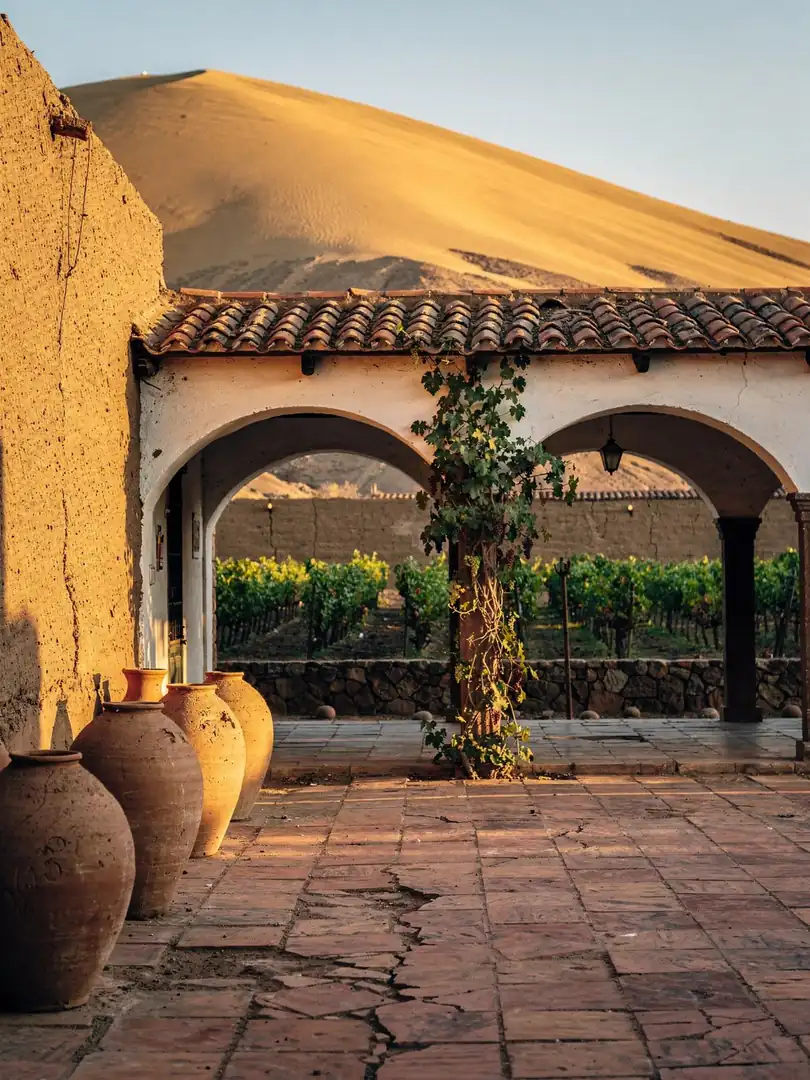
What is Pisco, and where does it come from? Pisco Perú is a grape brandy from the coastal desert of southern Peru, and the Ica Valley is considered its heartland. Between sand dunes and the Andes, green rows of vines stretch out, kept alive by the waters of the Río Ica, since rain almost never falls here.
The name is believed to derive from the port city of Pisco, through which the spirit was once shipped out. Spanish settlers brought the vines to the country in the 16th century. According to Hacienda Tacama, Francisco de Carabantes planted the first vines there in 1540, while Hacienda La Caravedo cites 1684 as the founding year of its distillery. Both figures come from the producers themselves.
What rules apply to Pisco from Peru? The Peruvian Technical Standard NTP 211.001 defines what may carry the name. It applies to the regions of Lima, Ica, Arequipa, Moquegua, and Tacna. The spirit must never see water or wood, must rest for at least three months, and must sit between 38 and 48% ABV. The European Union has recognized Pisco as a geographical indication since July 27, 2009.
Chile, too, has its own designation of origin for Pisco, with different rules and different growing regions. Both countries regard the name as part of their heritage, and how the differences show up in the glass is explained in the Elqui and Limarí region. Here, though, the focus is on the Peruvian path.
Around Ica today, large haciendas like Tacama, Vista Alegre, and Caravedo stand alongside smaller bodegas that distill their Pisco in modest quantities. Visitors who arrive in the southern summer get to witness the harvest. The stages of this journey follow the path of the grape: from vineyard to mash to still, and finally into the glass and onto the plate.