Fermentation Without Air
Mash & Fermentation
Alcohol must first be produced from the berries before anything can be distilled. This preliminary stage is called the mash: the fruits go into a vessel and ferment there. For strawberry-tree brandy, fermentation is considered, according to specialist literature, the most delicate task in the entire production process. This is where careful work separates from failed work: if the fruit is slightly rotten or the mash container leaks, it will show up later in the distillate and is hard to correct.
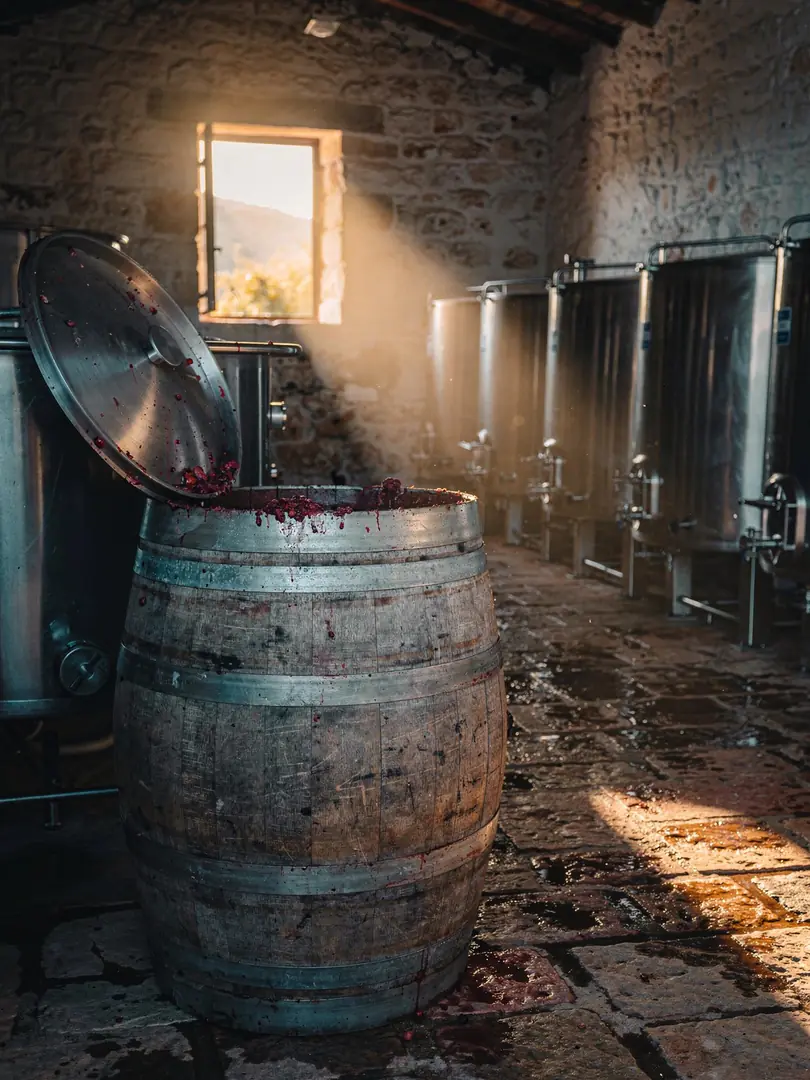
Sealed containers with only an outlet for the carbon dioxide produced are standard. Air should not get in, as this risks vinegar and off-flavors. Whether barrel or tank, what matters is that the vessel seals tightly and can be cleaned well. The fruit needs no outside help for this, since it brings its own sugar.
The fruit itself ferments, without any added alcohol. The law requires this too: a Category 9 fruit spirit is produced exclusively through fermentation and distillation of the fruit; flavoring and alcohol may not be added. Where a fruit spirit (Geist) steeps fruit in alcohol, Medronho instead ferments on its own.
Traditionally, the wild yeasts found on the fruit do the work. How long this takes depends on ripeness, warmth and yeasts. In one study of fermentation on a farm, it took 36 days.
Every fruit mash also produces methanol, because it comes from the pectin in the cell walls, not from poor technique. Measurements on strawberry-tree distillate showed, according to a Portuguese study, no high methanol content relative to EU limits. For fruit spirits, a maximum value of 1,000 grams per hectoliter of pure alcohol generally applies.