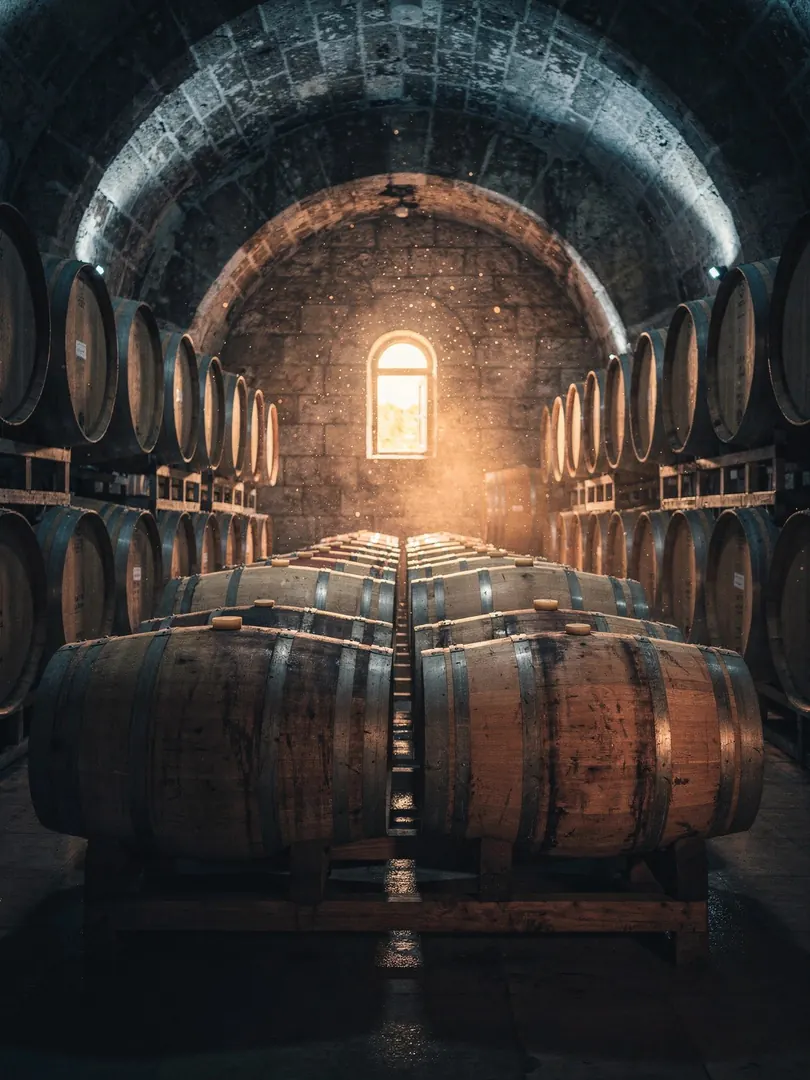
Oak and Chestnut
Aging & Storage
How long must Aguardente de Vinho Lourinhã age? The specifications require at least 24 months in wood. That's significantly longer than the EU rule for brandy, which is satisfied with just six months in a cask under 1,000 liters or one year in larger vessels.
The casks are small, under 800 liters, and made from Portuguese oak, French oak, or chestnut. The toasting of the cask's interior can be light, medium, or heavy. The stronger the toast, the more wood character, roasted aroma, and tannin the cask imparts to the brandy.
Comparisons with other aged wine brandies have shown that Aguardente from Lourinhã is rich in phenolic compounds and has high antioxidant values, depending on the type of wood and toasting level. The wood thus measurably shapes the brandy's composition. Houses mark older bottlings with abbreviations such as VS, VSOP, and XO.
Anyone stating an age may only count the youngest component of the blend. This is stipulated in EU regulations, and it applies to Lourinhã brandy just as it does to any other spirit with an age statement on the label.
Aguardente de Vinho Douro must, according to its specifications, be produced and also aged within the region. With Bagaceira, colorlessness is the norm, as many pomace brandies go into the bottle without any wood aging. If they are aged in casks, they're labeled Bagaceira Velha in the Vinhos Verdes after one year, and Velhíssima after two years.