Glass and Nose
Tasting
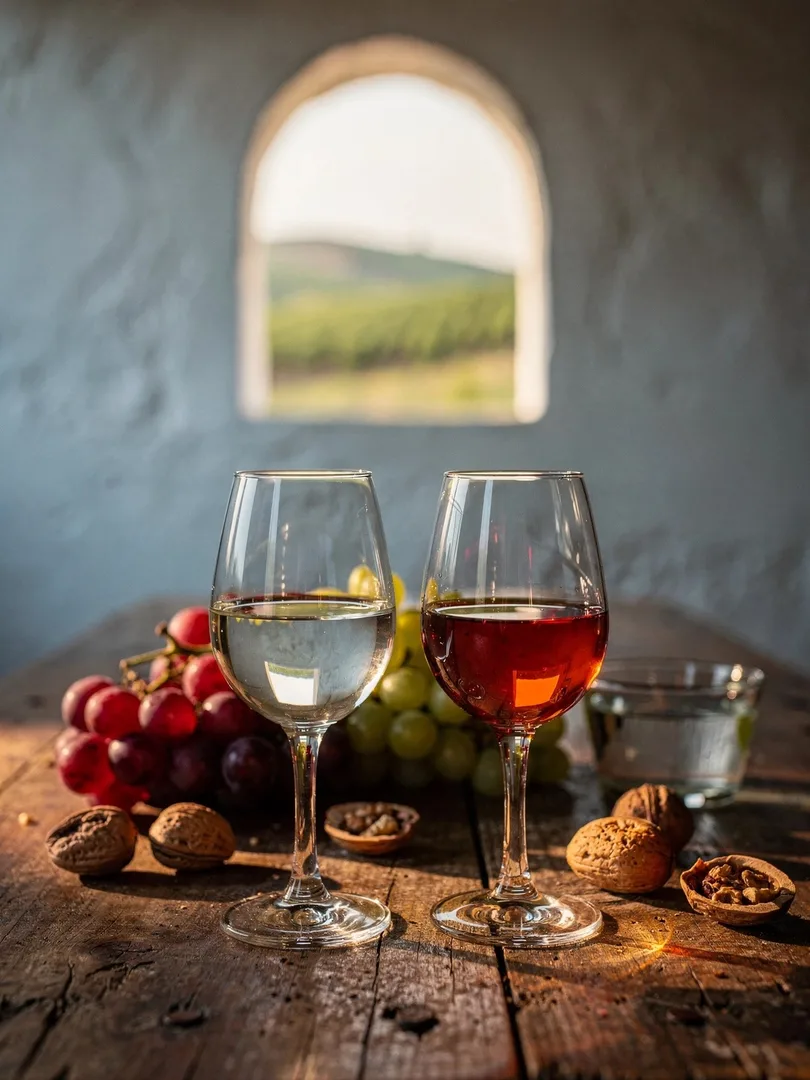
A nosing glass or a small tulip shape that narrows toward the top works well for tasting. This allows the aromas to concentrate without the alcohol overwhelming the nose. Room temperature is sufficient, as cold hides the aromas of both a wine brandy and a Bagaceira.
One example of an aged wine brandy is Aguardente DOC Lourinhã from Adega Cooperativa da Lourinhã, which the house offers, among others, as Matriz and as XO. With aged wine brandy of this type, expect notes of vanilla, dried fruit, spice, and toasted wood in the glass, along with a soft, warm core.
The Bagaceira from Quinta das Bágeiras in Bairrada represents the other type, the clear pomace brandy. Here, tasters look for freshness, herbs, and ripe berry skin. Bairrada's specifications describe herbal aromas and low bitterness—exactly what the nose should find.
The Bagaceira Velha from Soalheiro in the Vinhos Verdes shows what cask aging means. According to regional rules, a Bagaceira is labeled Velha after one year in cask. Expect wood and spice alongside the herbal notes, with more roundness on the palate.
When comparing brandies, pour small amounts and smell first with the mouth slightly open, as high alcohol quickly numbs the nose. Then take a small sip and let it linger briefly in the mouth. The finish reveals how long the aroma lasts and whether the alcohol asserts itself or stays in the background. Water in between keeps the nose fresh.