Grotto and Granite
Food & Tradition
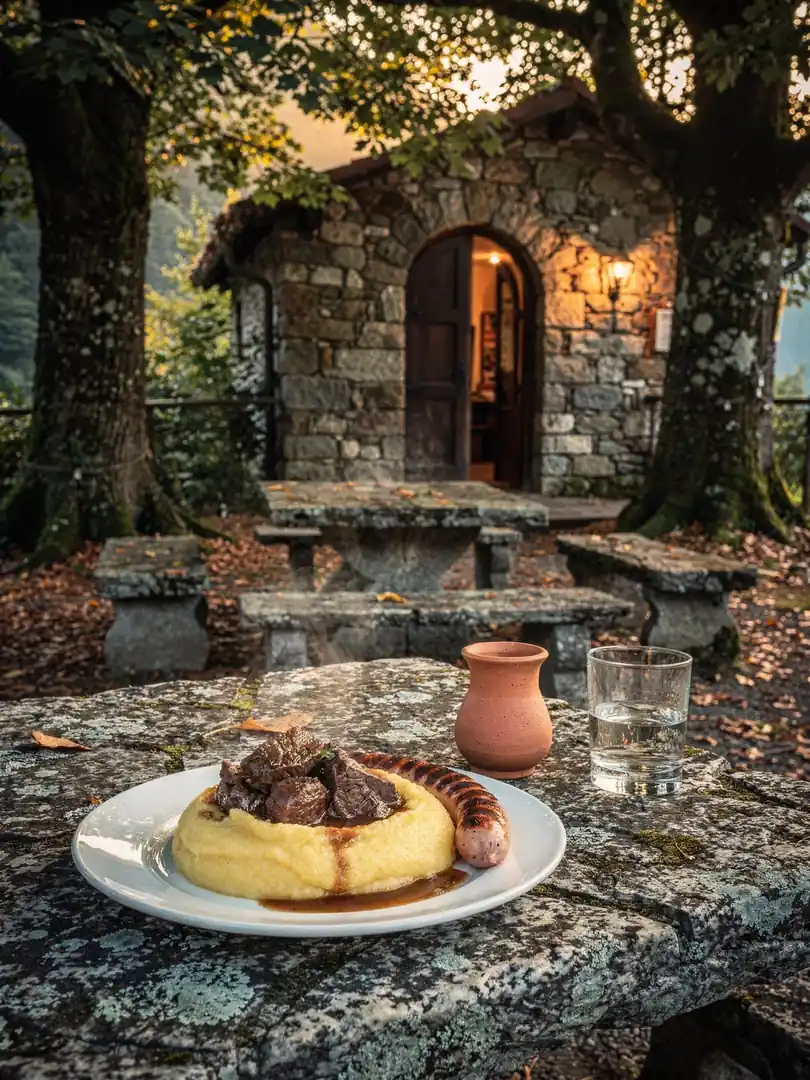
In the grotto, a small glass of grappa belongs at the end of the meal. Grotti were originally natural rock cellars where wine and cheese were kept cool; today they are inns set beneath old trees, with tables and benches made of granite. The wine is served in the boccalino or tazzino, a small earthenware jug, and the digestif rounds off the table at the end.
Dishes on the table include polenta with braised beef (brasato), luganighe, the Ticino sausage, risotto, minestrone, tripe, cheese, and fresh cheese. Rich, hearty food meets wine, and afterward a small spirit helps settle the stomach. The meal often closes with a torta di pane, the Ticino bread cake.
In Puschlav, pizzoccheri are among the specialties, a hearty dish of buckwheat noodles, vegetables, and cheese. In Bergell and Misox, chestnuts often appear on the table, followed by a small spirit. In some places, a shot of grappa also goes into the coffee, as a caffè corretto.
Nocino is not a brandy but a liqueur made from unripe green walnuts. Traditionally, the nuts are picked on the night of St. John's Eve, June 23 to 24, and steeped for several weeks in alcohol, often grappa, with cinnamon, orange peel, or spices. It's common in Ticino, but it belongs to the liqueurs rather than to pomace brandy.
The grappa year begins with the grape harvest in autumn, since that's when the pomace first becomes available. A digestif is meant to round things off, not quench thirst: small glasses suffice, and enjoying it means sipping slowly, after the meal.