Tulip Glass and Room Temperature
Tasting
What does a grappa from Ticino taste like? A young Grappa di Merlot smells of ripe plum, blackberry, and a touch of almond; on the palate it's dry, the seed-derived notes are noticeable, and the finish stays warm. Aged spirits, by contrast, show vanilla, dried fruit, cocoa, and wood spice, and feel rounder.
One example of the clear style is the Grappa Ticinese di Merlot La Fenice from Valsangiacomo. Delea is another name to know; reportedly, part of its range ages for seven to twelve years in cask. Comparing a young and an aged spirit side by side is instructive.
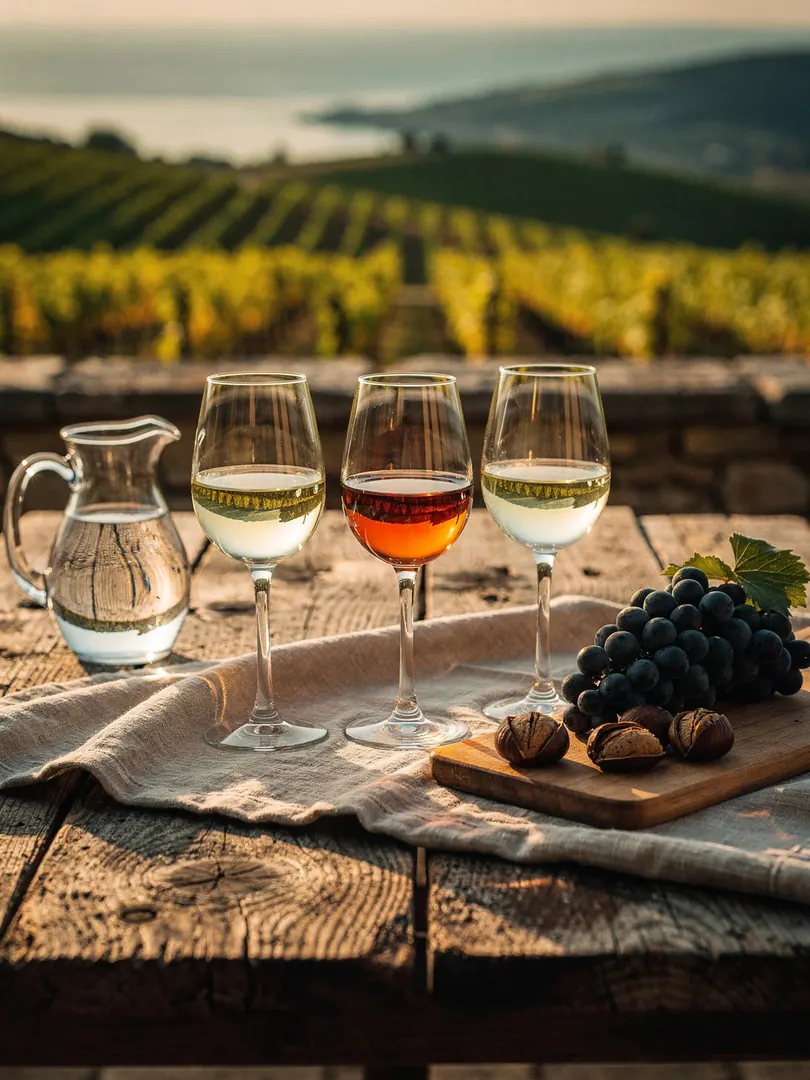
The right glass is a tulip or nosing glass with a narrow opening, so the aromas gather at the top and the alcohol doesn't sting. The first breaths at the rim of the glass are for smelling; only then follows a small sip. Water on the side helps cleanse the palate between tastings.
Served too cold, grappa closes up. As a rule of thumb, about ten to sixteen degrees Celsius works well, with aged spirits leaning toward the upper end. Warming the glass briefly in the hand reveals how the aromas open up. Caution with quantity is advised, since this is about small sips, not drinking for volume.
On a wooden table, a piece of white bread, a few grapes or chestnuts, and a pitcher of water belong alongside. Before tasting, it's worth checking the label: if it reads Grappa del Ticino or Grappa ticinese, the name is permitted under the EU–Switzerland agreement; otherwise, the valley's designation applies.