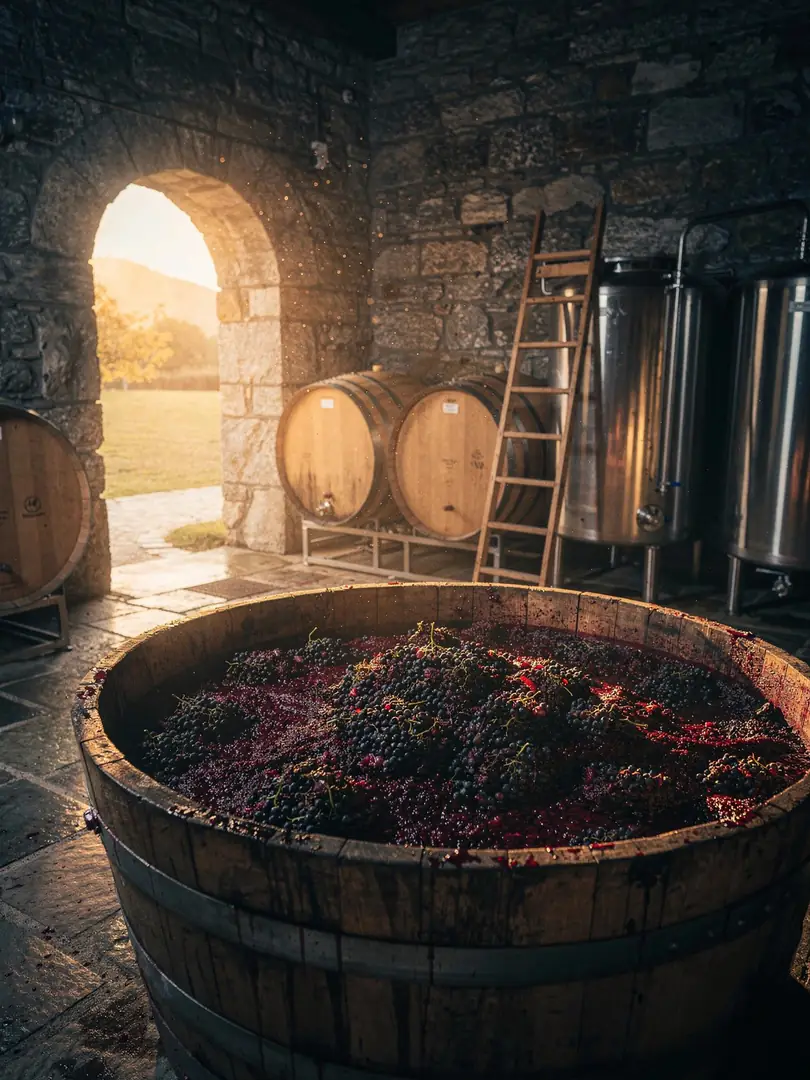
Pomace in the Cask
Mash & Fermentation
With pomace there's little to mash, since the solid mass of skins and seeds isn't crushed but packed into casks or tanks and sealed tightly. What matters is keeping air out. With oxygen, pomace quickly turns sour and moldy, and no fine brandy can be made from acetic acid.
Fermentation usually already takes place in the wine cellar. With red Merlot, the mash ferments together with the skins in the tank, and what remains afterward in the press contains little residual sugar but does carry the alcohol the yeasts produced from the sugar. It's this residue that the distiller later feeds into the still.
With Bianco di Merlot, the white-pressed Merlot, things work differently. Here the pomace comes from a press used before fermentation, so it still contains the sugar from the berries and must first ferment into alcohol in a sealed container. This fermentation runs with the yeasts present on the skins or with added cultured yeasts, and takes several weeks depending on temperature and sugar content.
EU law sets clear limits for pomace brandy. The pomace may contain no more than 25 kilograms of lees per 100 kilograms, meaning the yeast sediment that settles at the bottom. In addition, fermentation turns the pectin in the skins into methanol. It's present in every pomace brandy, and the maximum allowed is 1,000 grams per hectoliter of pure alcohol.
The cleaner and fresher the fermented pomace, the fewer off-notes later end up in the distillate. That's why it should go into the still soon after fermentation rather than sit outdoors for months. Anyone without their own equipment brings their pomace to a contract distiller, in the Mendrisiotto just as in Misox or Puschlav.