Glass or Cask
Maturation & Storage
A grappa from Ticino is still rough right after distillation and needs time. Most bottles contain a crystal-clear spirit that rests for a few months in stainless steel tanks or glass demijohns, allowing the aromas to round out and harsh notes to dissipate. Only afterward is it brought to drinking strength with water and bottled.
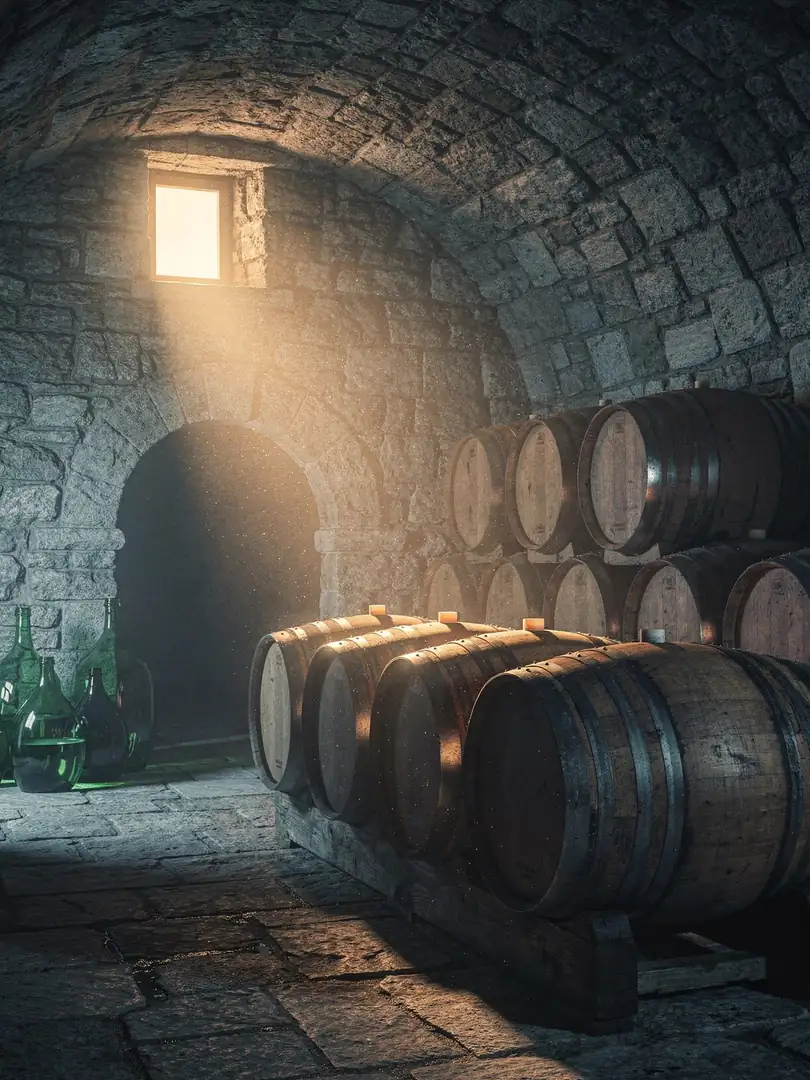
Aging a grappa in an oak cask produces a different drink. Vanilla and tannin are released from the oak, the spirit becomes softer and rounder, and its color shifts from pale yellow to amber. The cask breathes, some of it evaporates, and the alcohol content slowly drops. Reportedly, the house of Delea ages part of its range for seven to twelve years in cask.
An age statement on the label indicates how long the spirit spent in wood. Words like vecchia or invecchiata suggest cask aging, but the decisive factor remains the producer's own statement on the bottle. Anyone choosing Grappa del Ticino will therefore also find very young, clear bottlings on the same shelf.
Color, too, may be adjusted under EU law, for example with caramel coloring, so that bottles from different casks look consistent. A crystal-clear spirit, by contrast, is free of added color, and there the aroma alone reveals whether rest time was used. A bright storage room does no harm, but heat and air do.
In the cellar of a winery in the Mendrisiotto, casks, tanks, and demijohns often stand side by side. The coolness of the stone keeps the temperature even, and small quantities don't need large halls. The same holds for the southern valleys of Grisons, such as Val Calanca and Val Bregaglia, where storage likewise takes place in small containers.