Distilling Cherries from Standard Trees
Fruit & Raw Material
Chriesi is the local word for cherry in central Switzerland, and the distilling cherries around Lake Zug and the Rigi are small, with little flesh and a large pit. They're not much good for selling at market, but that's exactly what makes them valuable to the distiller. The small fruit with its high proportion of pit gives the spirit its characteristic almond note.
The production rules for Zuger Kirsch and Rigi Kirsch list approved varieties, including Basler Langstieler, Frühe Schwyzerkirsche, Schwyzer, Steinerkirsche, and Wölflisteiner. The Notiker is a local variety named after the village of Notikon near Baar. All these trees have been passed down here through generations.
At most ten percent of the mash may come from other varieties grown in the region. Table cherries are excluded: leftovers from table-fruit harvests may not go into the mash — only true distilling cherries qualify. This keeps quality consistent and protects the old varieties, since without buyers, the trees would simply be felled.
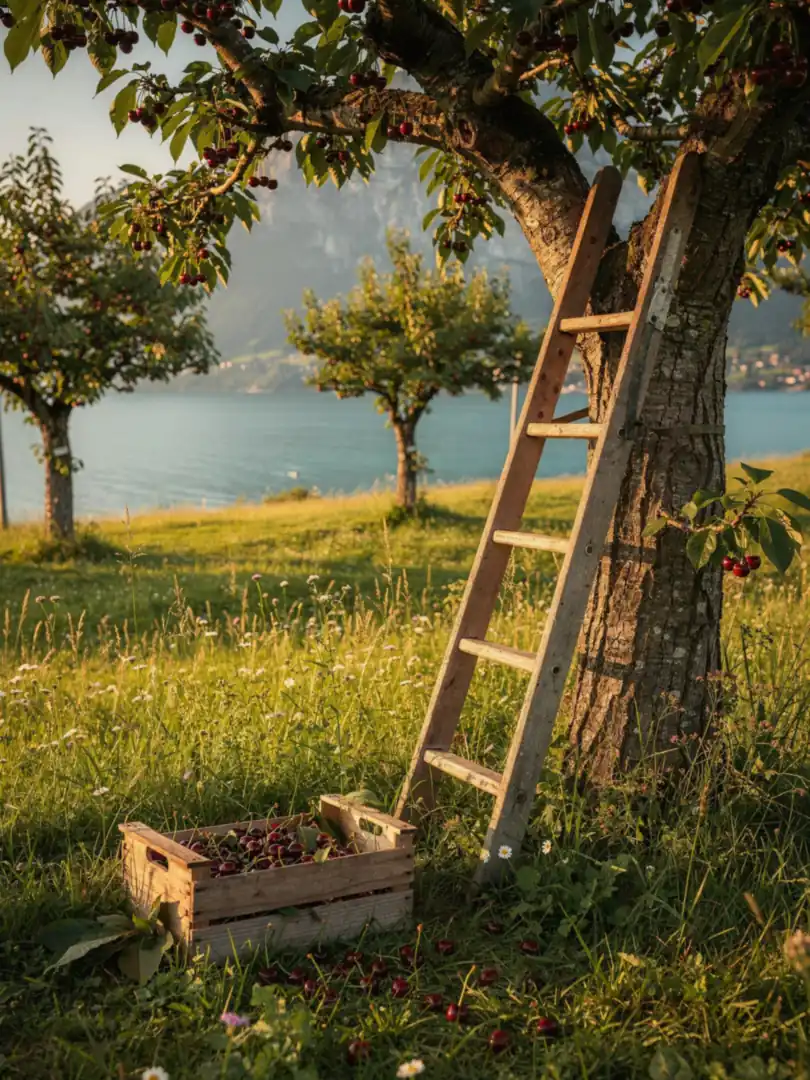
The trees grow as standards in meadows and on slopes. A standard tree carries its crown high above the ground, leaving room below for grass and grazing livestock. It takes years before it bears a full crop, and harvesting it requires a long ladder.
The designation of origin describes notes of sweetness, nuttiness, marzipan, and spice, carried by the stone character of the small fruit. For anyone wondering what Kirschwasser actually is: it's the traditional term for a cherry brandy — a distillate made from fermented cherries with no added alcohol.