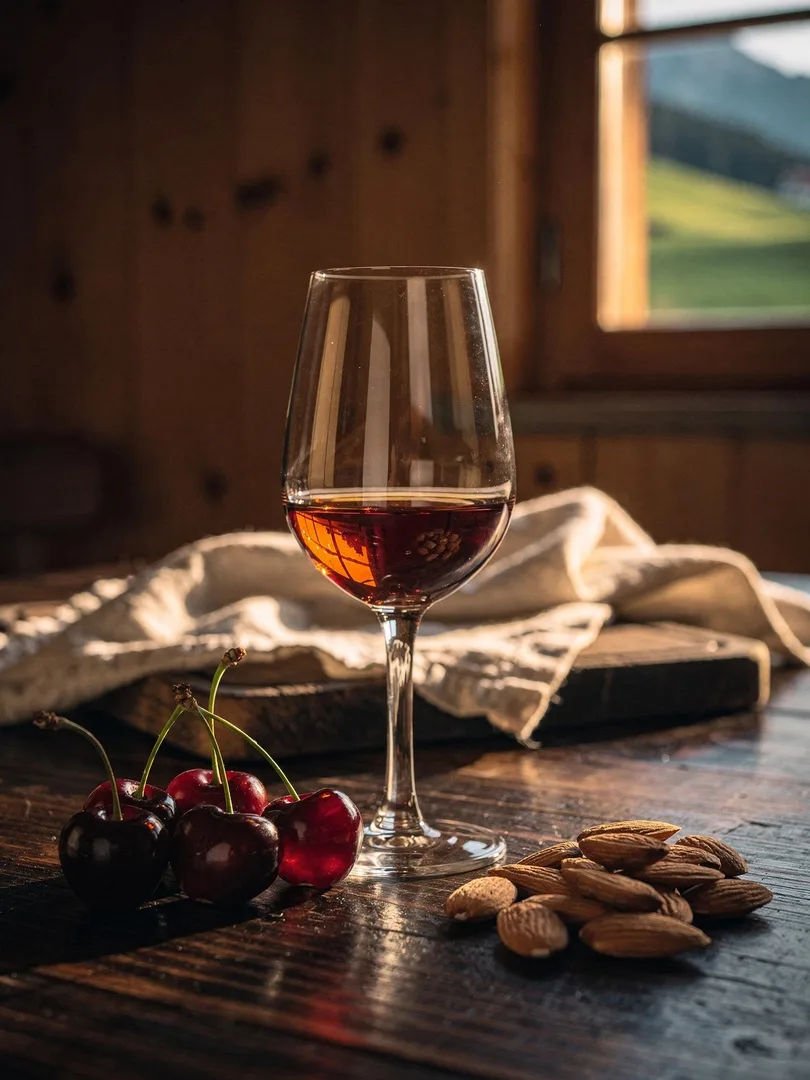
Zug or Rigi
Style
The difference between Zuger Kirsch and Rigi Kirsch lies in the name, not the recipe. Both follow the same production rules, but the label reads either one or the other, never both. Those distilling on the Rigi, the Queen of the Mountains, often choose Rigi, while in the canton of Zug, Zuger is the customary name.
The style is fruity and nutty. The designation of origin specifies notes of sweetness, nuttiness, marzipan, and spice, carried by the almond character of the pits. Nothing is flavored after distillation — there's no added aroma and no barrel character.
What sets it apart from its neighbors is the craftsmanship. Schwarzwälder Kirschwasser has its own EU geographical indication and comes from a different region; Zuger and Rigi Kirsch are governed by approved varieties, standard trees, and the traditional pot still. Tasting both side by side means comparing two protected regions, not two trends.
AOP stands for Protected Designation of Origin. It ties the name to a specific region and to a set of production rules issued by the federal government, most recently revised on December 19, 2024. A distiller may distill a single variety on its own or blend several together, which is why each producer tastes slightly different. What they all share is a clear, colorless appearance and the absence of wood — and a shared focus on where the fruit comes from: it grows within the defined region around Lake Zug and the Rigi.
The profile below shows both names at a glance. The figures represent typical ranges found in bottlings; the production rules require a minimum of 40 percent ABV and at least six months of maturation.
Zuger Kirsch AOPFruit brandy · Distilling Cherries from Standard Trees
- Alcohol
- 40–43 % vol
- Maturity
- 0.5–2 Years
Crystal clear, almond and marzipan, nutty and fruity with a fine spiced finish.