Six Months of Rest
Maturation & Storage
How long must Zuger Kirsch mature? At least six months, as required by the production rules, before it can be sold as Zuger Kirsch AOP or Rigi Kirsch AOP. Fresh off the still, the distillate is often sharp and unsettled; during the rest period, the aromas round out.
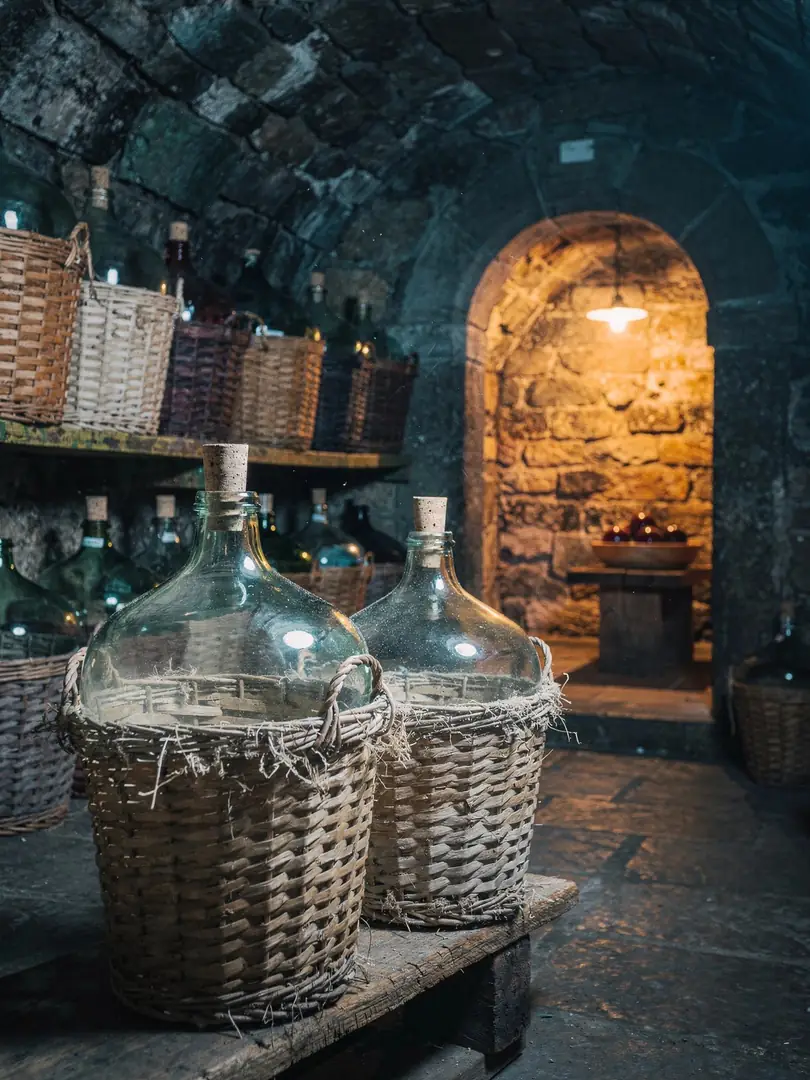
Unlike Cognac or Calvados, Kirsch doesn't take on color from oak barrels. It rests in neutral containers, usually glass demijohns or stainless steel, and traditionally in stoneware. These vessels impart nothing, so the spirit stays crystal clear and the fruit stays front and center. Wood would mask the delicate almond note.
Kirsch comes out of the still at a much higher alcohol content than what ends up in the bottle. It's brought down to drinking strength using softened or demineralized water, so no cloudiness forms. It may be sold at a minimum of 40 percent ABV.
Sweetening is tightly limited: the EU allows up to 18 grams of sugar per liter for fruit brandies, but the production rules for Zuger and Rigi Kirsch permit only 5 grams. Unlike Cognac, there are no age statements for Kirsch. For those seeking an older vintage in the glass, occasional bottlings that rested for several years in the demijohn can be found, and the producer will then state the year.
There's a reason maturation is mandatory: freshly distilled spirit often smells strongly of alcohol and pit, and only rest allows the aromas to come together. The distiller tastes along the way and decides when the spirit is ready for bottling. Six months is the minimum, not the goal.