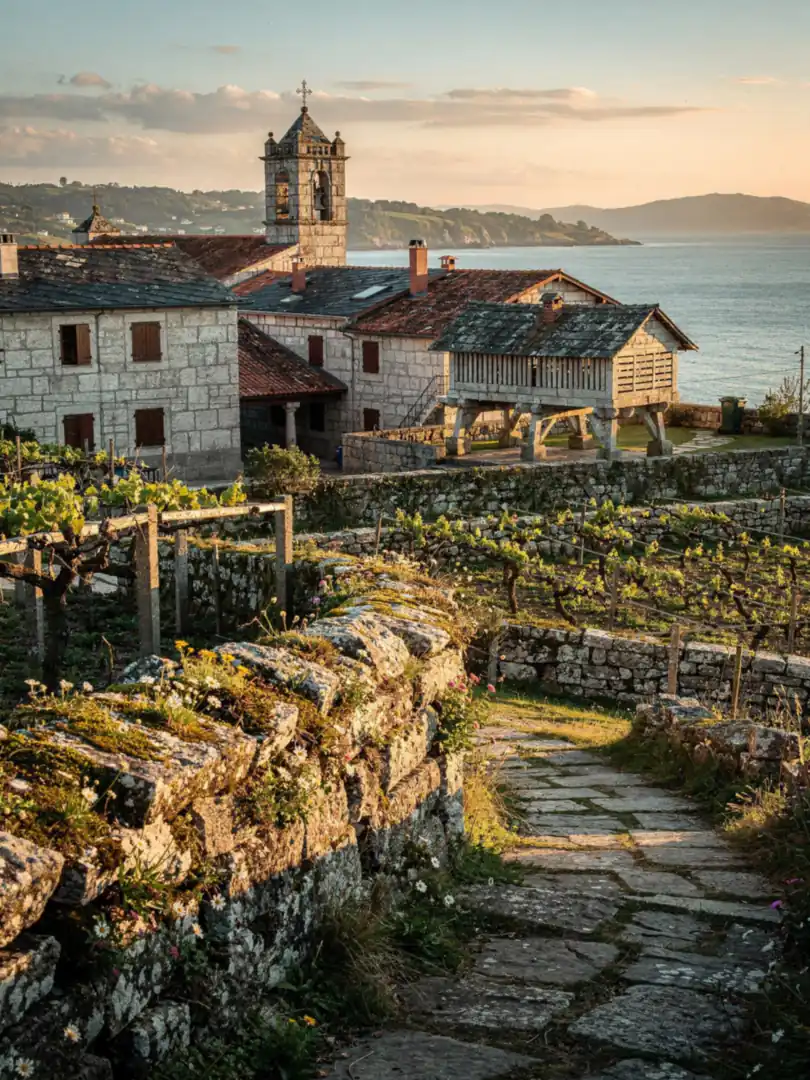
Northwest Spain
Region & History
Orujo de Galicia, the pomace brandy from northwestern Spain, is made from what's left after pressing: the skins, seeds, and stems of the grapes. Orujo is simply the Spanish word for pomace.
The art of distilling arrived in Europe during the Middle Ages, first as medicine in monasteries and apothecaries. The word Alquitara for the simple still comes from Arabic. In damp Galicia, where wine grows along the coast and in the river valleys, farmers and winegrowers distilled the pomace left over after the harvest.
The name is now protected. Orujo de Galicia has been listed as a geographical indication in the EU register since 1989 and is classified as a pomace spirit under Category 6 of the Spirits Regulation. The grapes must come from Galicia, and both distillation and any aging must take place there too. In Galician, the whole thing is called Augardente de Galicia; compliance is overseen by the Consello Regulador de Augardentes e Licores de Galicia.
Around the clear brandy, a small family of other drinks has developed. There's the herbal spirit Augardente de Herbas, the herbal liqueur Licor de Herbas, and the coffee liqueur Licor Café, each with its own protected designation. The herbal spirit is made from Orujo by steeping or distilling with at least three plant species, while the liqueur is made from Orujo and agricultural alcohol. These are no longer pomace brandies but spirits with added ingredients; our focus here is the clear Orujo.
To the east, in Asturias, the focus shifts to the apple. The Aguardiente de sidra de Asturias, a brandy distilled from Asturian apple wine, has also held a protected geographical indication since 1989, falling under Category 10 of the Regulation. Both spirits follow their own rules, and the path from pomace and from apple to brandy differs at nearly every step.