Pomace and Apples
Fruit & Raw Material
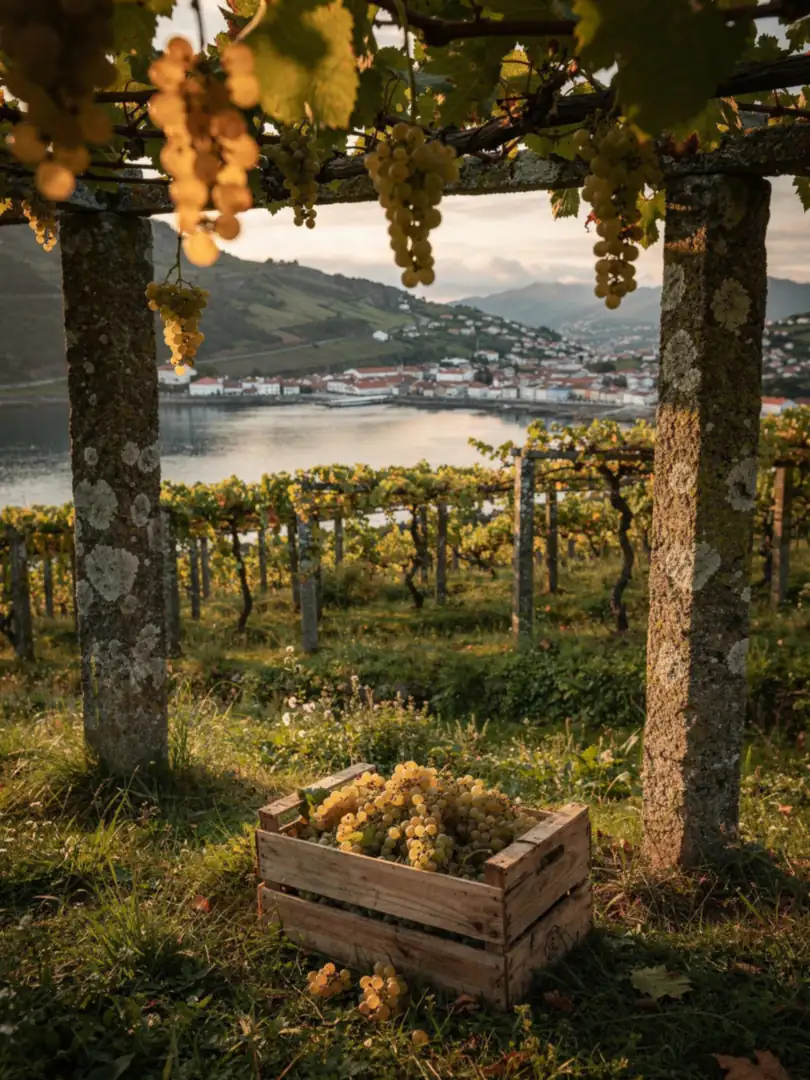
Wine grows in Galicia under Atlantic influence, and that's also where the pomace used for Orujo comes from. Five wine regions shape the land: Rías Baixas, Ribeiro, Ribeira Sacra, Valdeorras, and Monterrei.
The raw material depends on the wine. White varieties like Albariño along the coast around Cambados, Treixadura in Ribeiro, or Godello in Valdeorras are pressed before fermentation, so their pomace is still sweet and must first be fermented. Red Mencía, on the other hand, ferments on the skins and comes out of the press already fermented. One producer reportedly blends one-fifth Albariño skins with four-fifths Mencía. Making sure the pomace arrives fresh and clean at the distillery is essential for a pure brandy.
Why pomace specifically? Much of the aromatic substance sits in the grape skin. The brandy therefore carries a great deal of the grape variety's character, from floral to fruity notes.
The legal framework is strict: only grape pomace may be used, along with at most 25 kilograms of yeast lees per 100 kilograms of pomace. Orujo is also made in Asturias and Cantabria, but only the Galician version may carry the protected name Orujo de Galicia.
The raw material in Asturias is entirely different. There, the brandy comes from apples never meant for eating: tannic, acidic cider apples from the orchards of the Comarca de la Sidra around Villaviciosa, Nava, Colunga, Bimenes, Cabranes, and Sariego. Varieties like Raxao or Durona de Tresali belong to the region's cider tradition. Harvest falls in autumn. From the juice comes first the apple wine, then the brandy.