Wood and Rest
Aging & Maturation
An Orujo envejecido, meaning an aged Orujo, gets its color from the wood. The clear Orujo, by contrast, is bottled colorless and, per the product specification, reaches the market without any aging.
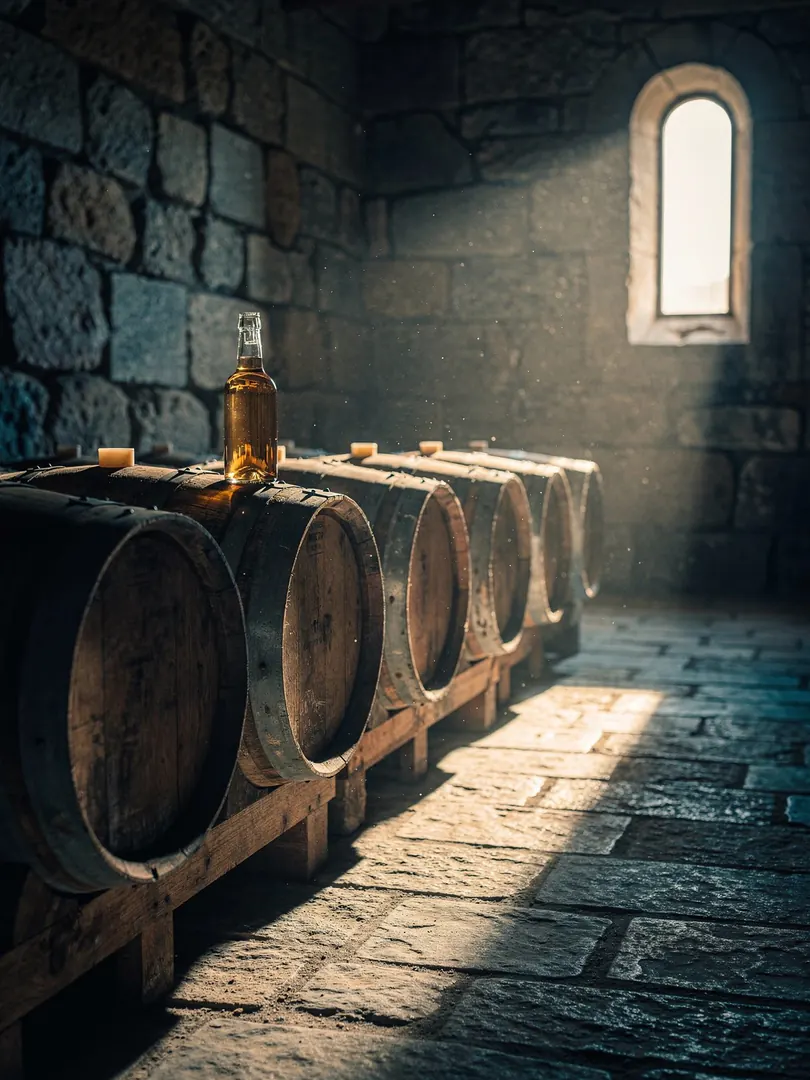
To be sold as an aged Augardente de Galicia, the spirit must rest for at least one year in wooden vessels, often oak barrels. The result is transparent with an amber, lightly toasted hue. On the nose, vanilla, spice, and dried fruit join the floral notes the young brandy already carries.
For age statements on the label, a rule of the Spirits Regulation applies: only the age of the youngest component in the barrel may be stated, and aging must take place under tax supervision. So if different vintages are blended, the label follows the youngest one.
In Asturias, a similar idea applies to Aguardiente de sidra, just with different vessels. Before sale, the brandy must rest or age in wood. The fresh version, called Fresco, reaches the market after at least a year's rest in stainless steel or glass, dry and with hints of apple and apple wine.
There are also producers who age their apple brandy in oak. The house Los Serranos says it has followed an artisanal family tradition since 1895 and ages its brandy in oak barrels. The wood rounds out the tart freshness and lends warmth to the clear distillate without masking the apple. The resting period is no minor detail — it's precisely what takes the sharp edges off the young spirit.