Wine Instead of Fruit
Fruit & Raw Material
What grapes is Brandy de Jerez made from? The regulations specify no particular grape variety; they simply require aguardientes and distillates made from wine. These must carry over the volatile compounds from their base wine, namely acids, aldehydes, higher alcohols and ethyl acetate. Where the wine is grown is not specified; what is regulated is where the brandy ages and is bottled.
Reportedly, some of the distillates come from Airén, the white bulk grape from La Mancha, which is fermented and distilled inland before the brandy travels to Andalusia. The vines around Jerez are traditionally used for sherry.
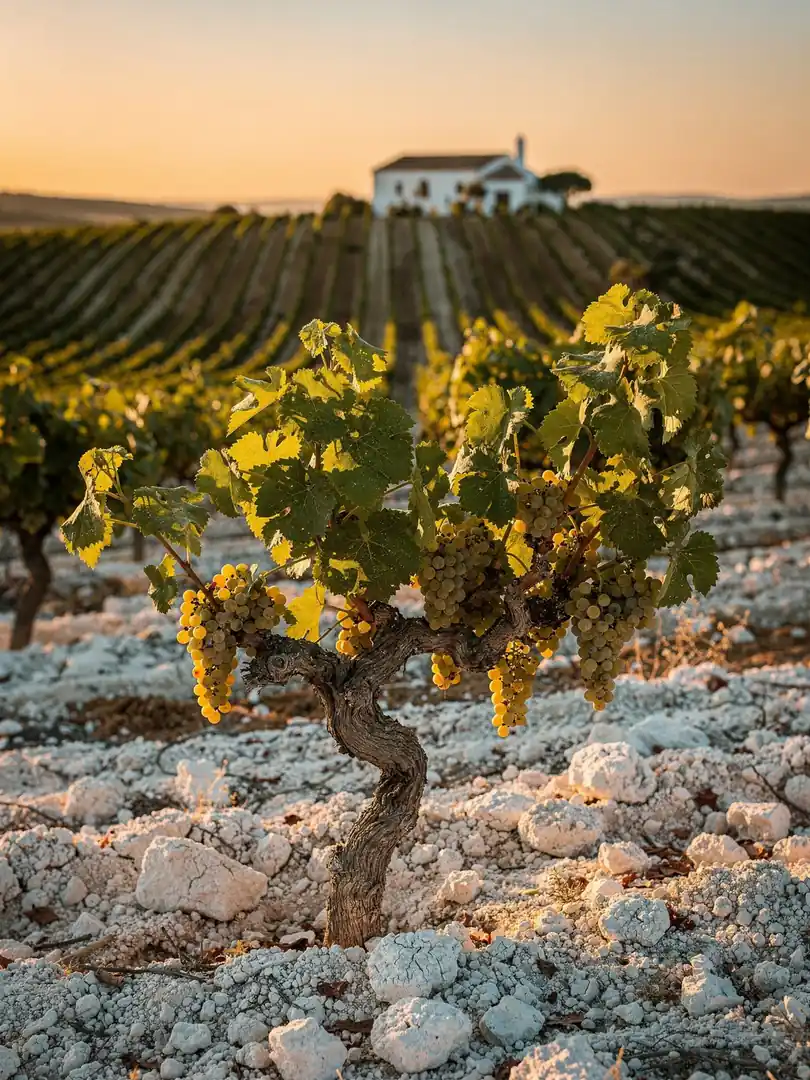
Sherry's leading grape is Palomino, and it also supplies wine for brandy: according to trade sources, González Byass's Lepanto is made from Palomino. It grows on pale, chalky soils known as albariza. In winter they soak up the rain and hold onto it until summer, when the sun scorches the coast.
It's no coincidence that both sherry and brandy are made from wine here. The bodegas that mature wine have the casks, cellars and experience for both. Harvest falls in late summer, when the grapes build up plenty of sugar under the Andalusian sun.
For brandy, the fruit in the glass matters less than what the wine contributes in terms of accompanying compounds, since both are concentrated during distillation. You'll come across the term "holandas" later, referring to the lightly distilled spirits. Their raw material is the same wine, just distilled differently.