The Base Wine
Mash & Fermentation
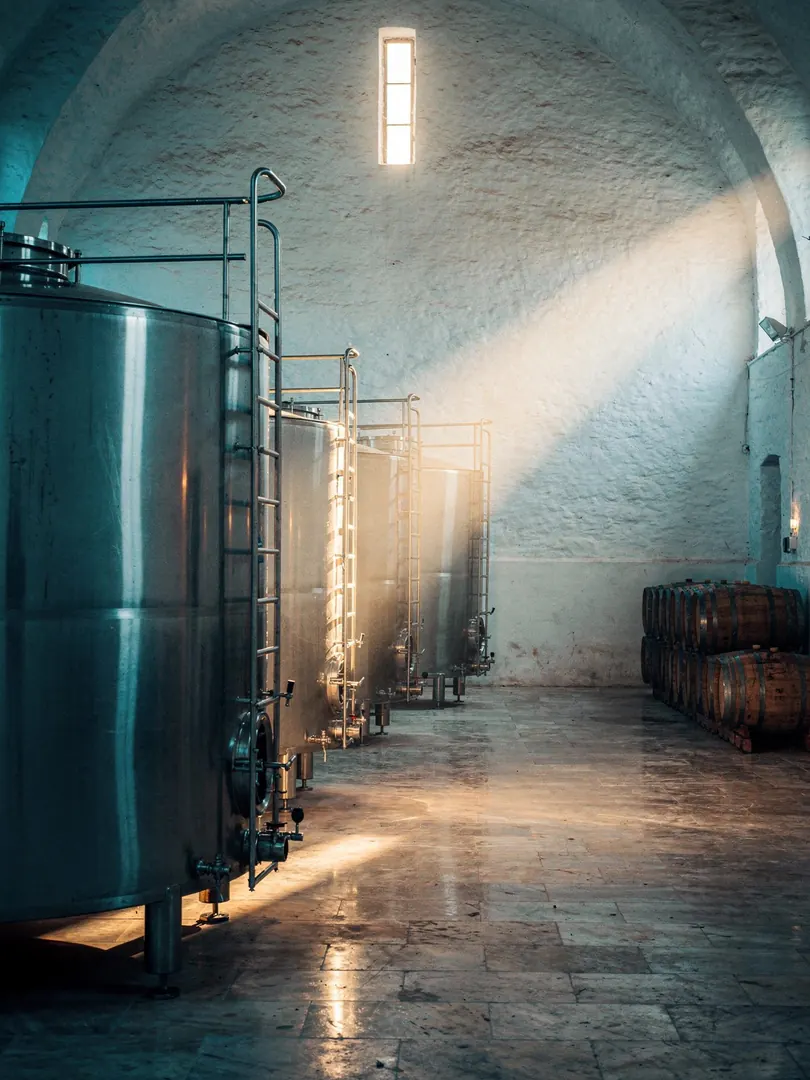
There's no mash in the sense of crushed fruit pulp in Jerez, because Brandy de Jerez comes from finished wine, and that wine isn't made for drinking. After the harvest, the grapes go to the press, and the must ferments without skins until the yeasts have converted almost all the sugar into alcohol. Depending on temperature and yeast, this usually takes a few weeks and nowadays generally happens in large stainless steel tanks.
Unlike sherry, this wine isn't fortified with added alcohol. It goes into the still dry and unfortified, since a brandy may not contain any foreign alcohol.
What matters are the compounds that form as byproducts of fermentation. The regulations list them: volatile acids, measured as acetic acid, aldehydes such as acetaldehyde, higher alcohols such as propanol, butanol and isoamyl alcohol, as well as ethyl acetate. A brandy made from such wine is meant to retain these volatile compounds, since they later carry aroma into the glass.
This becomes clear by contrast. If you distil wine until almost nothing but pure alcohol remains, you get a flavorless spirit that brings nothing to a brandy. That's why the regulations require the distillates to retain the volatile compounds of their wine, and these are measured again in the finished brandy.
How much is required depends on the age class. The older the class, the more accompanying compounds the regulations demand in the finished brandy. Whether the wine comes from Palomino or, as reported, from Airén, the process stays the same. Fermentation lays the foundation that distillation and cask can only build upon.