Sweet, Round, Nutty
Brandy Style
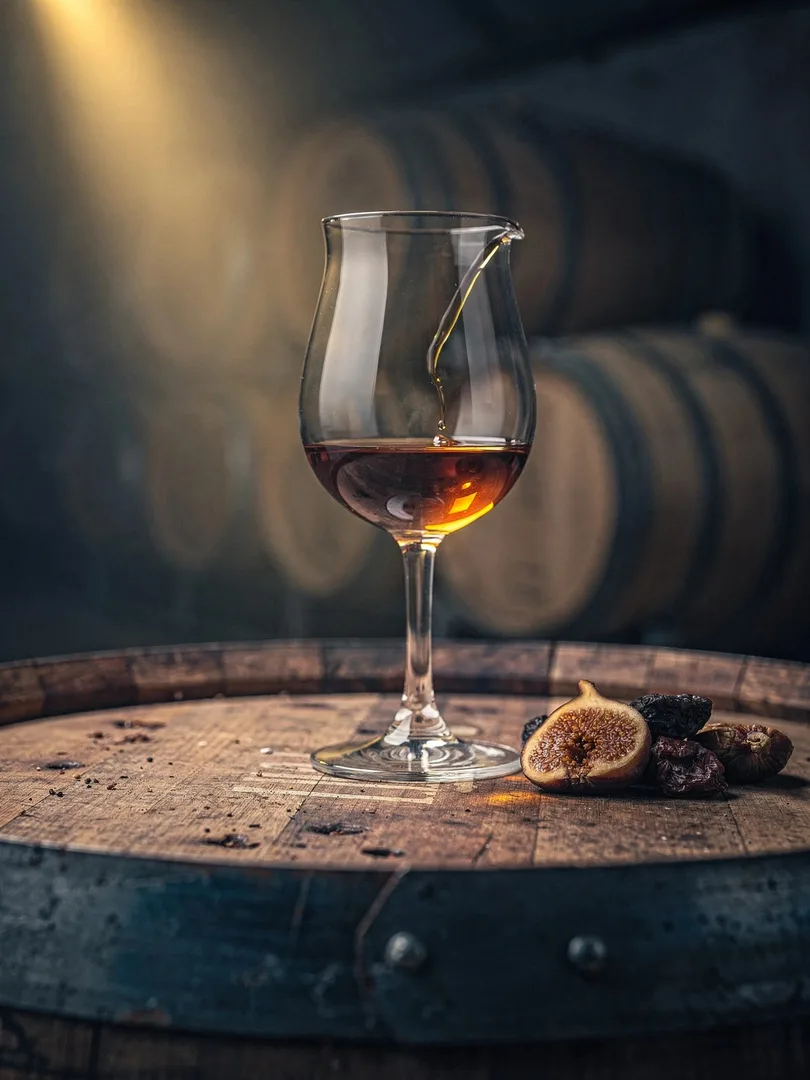
Brandy de Jerez is considered sweeter and rounder than many French brandies, for two reasons. The wood, which previously held sherry, imparts raisin, nut and caramel notes. And the regulations permit up to 35 grams of sugar per liter as well as caramel coloring, which a brand uses to keep its color consistent over the years.
The basic Solera is the entry point: averaging more than six months, with color ranging from pale gold to amber, and aromas of vanilla, wood and grape. It's the brandy least shaped by the wood. Its content of volatile accompanying compounds must be at least 150 grams per hectoliter of pure alcohol.
Solera Reserva and Solera Gran Reserva grow darker. This is measured as light absorption at 500 nanometers, and the ranges increase with age; for Gran Reserva they lie between 0.200 and 1.200. The accompanying compounds also increase, to at least 200 and 250 grams per hectoliter respectively, and more tartaric acid must be drawn from the wood.
Vejez Calificada forms the pinnacle: Solera 12, 15, 18 and 30 años, with at least 300 grams of accompanying compounds and an absorption above 0.250. Here, raisin and nut are usually joined by tobacco, leather and spice.
The difference from its neighbors lies in the concept. Cognac and Armagnac define themselves through terroir and distillation method, while Brandy de Jerez defines itself through cask and cellar. Age isn't counted from the harvest, but as an average within an ongoing system in which young and old brandy constantly mingle. Tasting all three side by side, you'll notice above all how differently a cask can express itself.
Solera ReservaWine and grape brandy · Wine, wine distillates (holandas)
- Alcohol
- 36–40 % vol
- Maturity
- 1–3 Years
Golden-brown, raisin, vanilla and wood, soft and lightly sweet on the finish.