Amber in the Glass
Tasting
How do you taste a Brandy de Jerez? A tulip glass or nosing glass that narrows toward the top helps concentrate the aromas. Pour only a small measure, hold the glass at a distance at first, and approach gradually, since otherwise the alcohol will overwhelm everything. Room temperature is fine, as the hand will warm the brandy slightly anyway.
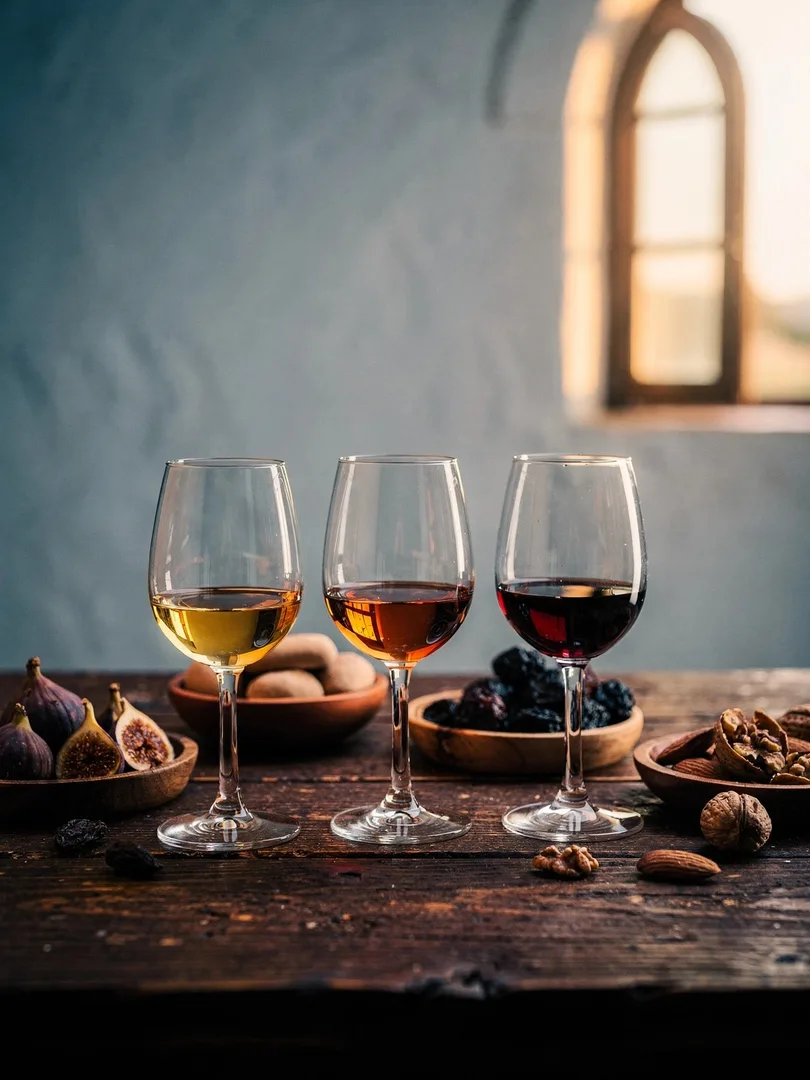
Color comes first: gold in young Solera, amber to mahogany after long aging. Then the nose, where Brandy de Jerez typically reveals raisin, dried fig, almond and caramel, with older brandies adding tobacco and leather. On the palate it's soft and leans sweet, with a warm finish carrying notes of wood and nut.
Three examples from the Gran Reserva class: the Lepanto from González Byass, described as showing caramel, dried almonds and tobacco leaf. The Cardenal Mendoza, which its producer links to Oloroso and Pedro Ximénez casks and which one review calls richer and sweeter. And the Solera Gran Reserva from Lustau.
If you want to compare, set a Solera Reserva next to a Gran Reserva. The younger brandy smells of wood, vanilla and grape, while the older one has more depth, more sweetness and a longer finish. Between tastings, water helps keep the nose from tiring.
The glass also reveals how cleanly the brandy was made: a good one shows sweetness and wood in balance, with nothing standing out. A label designation like Solera Gran Reserva tells you first about the average age, and only then anything about the taste.