Base Wine, Not Mash
Mash & Fermentation
How is the wine for brandy made? Unlike a fruit brandy, this isn't made by distilling a mash — it's finished wine made from Chenin Blanc and Colombar. The grapes are pressed, and only the juice ferments, since with white wine the skins are typically separated off right away.
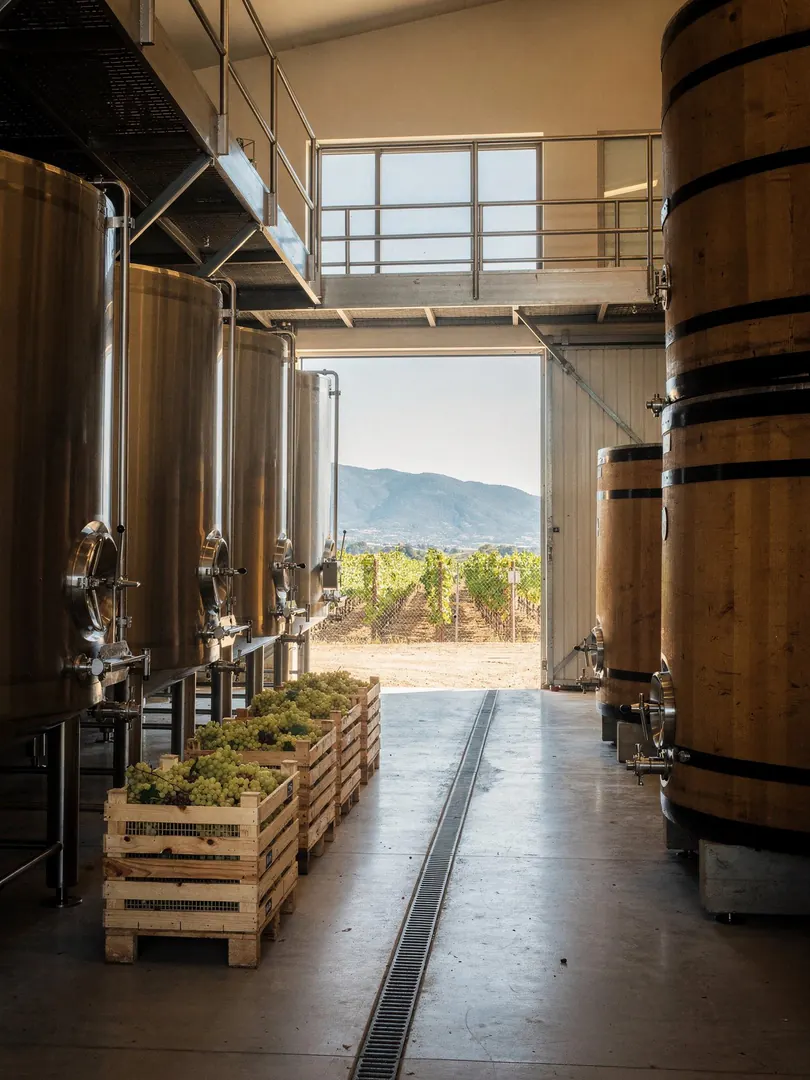
In the fermentation tanks, usually made of stainless steel, yeast converts the sugar in the must into alcohol and carbon dioxide. Depending on temperature, yeast strain, and sugar content, this takes anywhere from several days to a few weeks. The result is a dry wine, low in alcohol and high in acidity.
This wine isn't meant for the table, and that's by design. Low alcohol content means the distiller needs a lot of wine — according to industry figures, around five liters for every liter of brandy produced. In exchange, the delicate aromas of yeast and grape are preserved through distillation, rather than getting lost in body or sweetness.
The yeast itself plays a role too. Whether the wine is separated from the settled yeast lees before distilling or left in contact with them is a choice each house makes differently, and it shapes how round or lean the finished brandy turns out. The exact recipes are closely guarded, and they vary from house to house.
A word on safety: under EU law, brandy may contain only a small amount of methanol — no more than 200 grams per hectoliter of pure alcohol. The reason lies in the fruit itself: methanol comes from pectin, and pressed juice generally contains less of it than a fruit mash made with skins and flesh.
For the distilleries of the Western Cape, then, the base wine is a product in its own right — never meant for the table, and only finding its true purpose once it reaches the still. Anyone touring the fermentation cellars isn't seeing a wine cellar in the usual sense, but the first stage of a distillery.