Tramin and Unterland
Region & History
South Tyrolean Williams, South Tyrolean Gravenstein, South Tyrolean Golden Delicious: anyone buying fruit brandy between Bolzano and Salurn will find these names on the label, and each one is a protected geographical indication of the EU. They have been listed in the European register since 1989, alongside South Tyrolean Obstler and South Tyrolean Grappa.
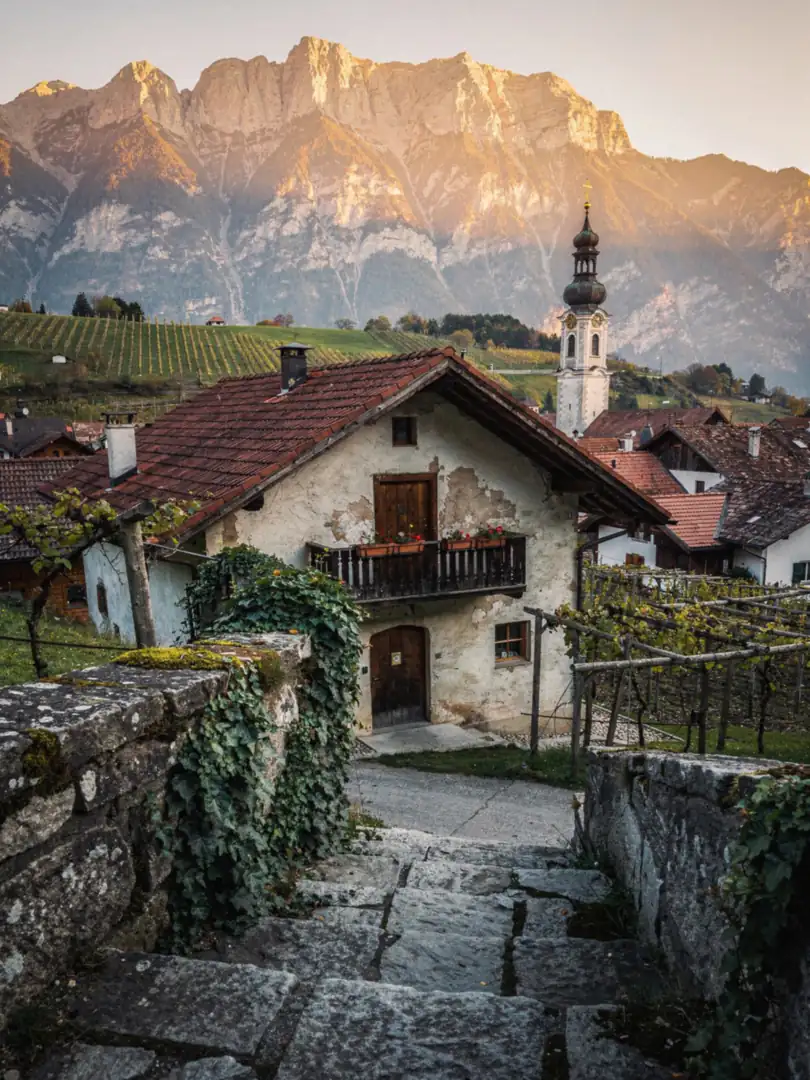
The Adige Valley south of Bolzano, the Überetsch, and the Unterland with Kaltern, Tramin, Neumarkt, Auer and Salurn form the heart of South Tyrolean fruit growing. On the valley floor, apple orchards stand in long, straight rows, while vines grow on the slopes above. Where two fruits thrive so close together, a distillery is never far away: pears, apples and the pomace from the wineries all become brandies here.
No exact date marks when distilling first began in the Unterland. What's visible today are the operating distilleries, and two of the best known are in Tramin. Brennerei Roner advertises 80 years of passion for flavor on its website, while Brennerei L. Psenner traces back to Ludwig Psenner, who first distilled grappa from grape pomace in Tramin before adding fruit brandies and liqueurs.
The protected designation of origin draws a clear line. Only brandy made from Williams pears that were fermented in South Tyrol, distilled there, and diluted to drinking strength—at a minimum of 40 percent alcohol—may be called South Tyrolean Williams. For South Tyrolean Grappa, the grapes must have grown in the province and been processed into wine there; distilling and bottling must also take place within the region.
South Tyrolean Marille, Kirsch, Zwetschgeler and Enzian are likewise protected, but belong to the mountain valleys and to the journey through Vinschgau and Eisacktal. In the Adige Valley, everything centers on apple, pear and grape.