Apricot in the Vinschgau
Region & History
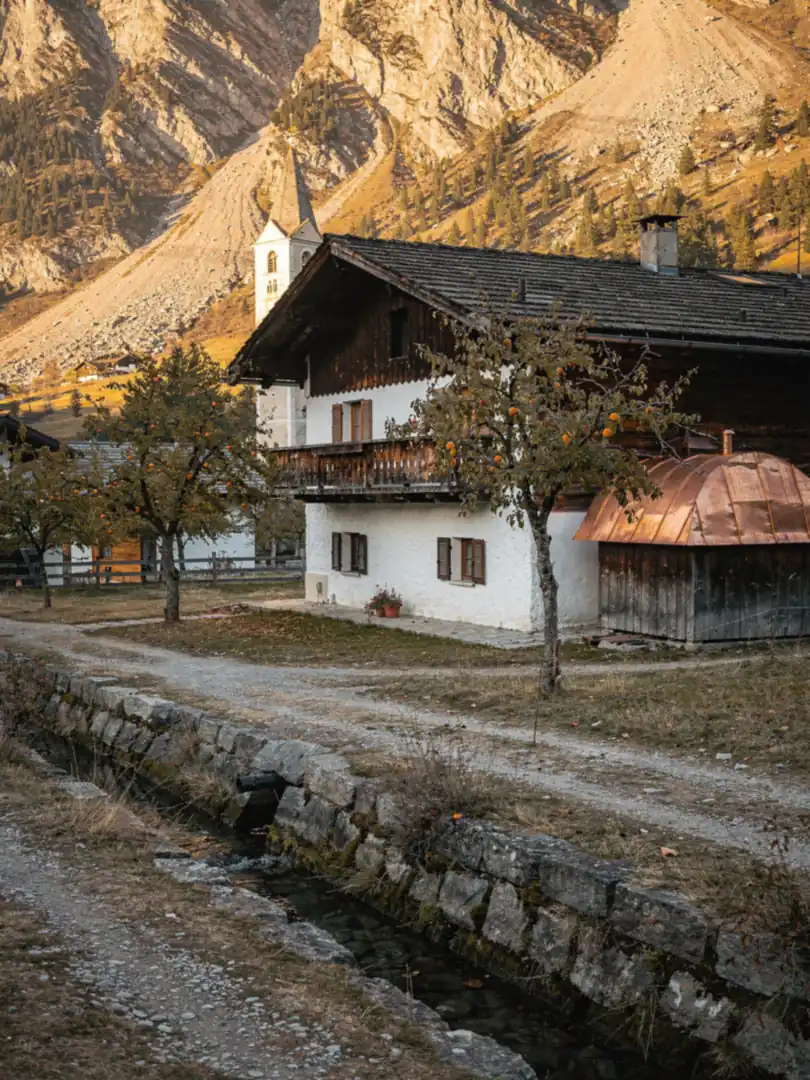
Ask for apricot schnapps in South Tyrol, and you'll usually be handed a brandy from the Vinschgau. The upper Adige valley is counted among the driest in the Alps. Because rain is scarce, farmers once channeled water along Waale, narrow irrigation runnels cut into the hillside, to reach their fields. Here the apricot is called Marille, and it yields the region's best-known brandy.
In the Middle Ages, distilling across the Alpine region began as medicine, as aqua vitae, meaning water of life, practiced in monasteries and apothecaries. In the Vinschgau and Eisacktal, small farms later carried the craft forward. Today mountain farm distilleries operate there, such as Biobrennerei Steiner in Mals or Brennerei Knöspele above Brixen. One relies on organically grown or wild-foraged fruit, the other on fruit and grapes from the sunny slopes near Brixen.
The EU has protected four names from the area. Südtiroler Marille, Südtiroler Kirsch and Südtiroler Zwetschgeler are fruit brandies, while Südtiroler Enzian is a root brandy distilled from fermented gentian roots. Fermentation, distillation and reduction to drinking strength must all take place in the Province of South Tyrol; this is set out, for instance, in the specification for the Zwetschgeler.
It's the provincial name that's protected, not the valley. There's no separate designation for the Vinschgau among these brandies, even though the Original Vinschger Marille enjoys a fine reputation as a fruit. The Eisacktal around Brixen and Klausen takes a different approach, since vines grow alongside fruit trees there, and the distilleries process grapes as well as fruit. So what ends up in the still is determined less by law than by what grows on the farm.