Apricot, Plum, Gentian
Fruit & Raw Material
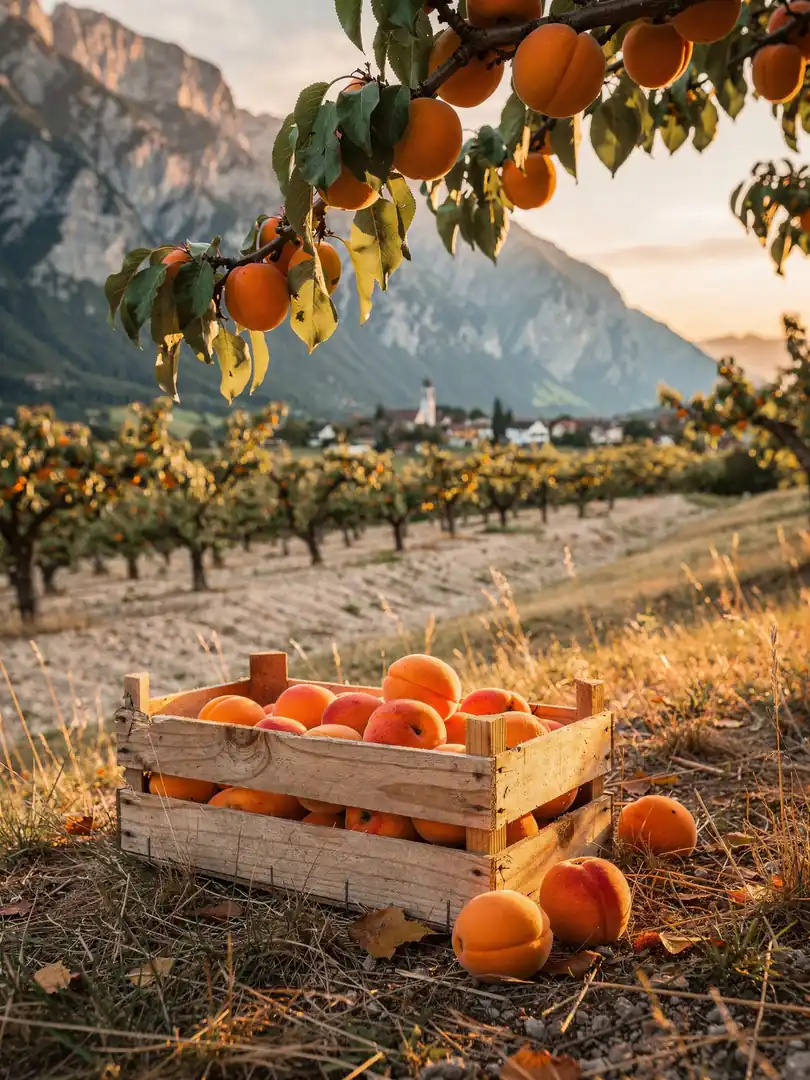
In the Vinschgau, apricots ripen between 700 and 1,200 meters on sandy soils. Plenty of sun, little rain and cool nights give the fruit its bold aroma, according to Südtirol Marketing. It has been cultivated there since the nineteenth century, in the valley between Naturns and Mals.
Apricots are temperamental fruit. For brandy, they must be fully ripe, soft and full of sugar, and it's precisely then that they don't keep for long. A late frost during blossom can wipe out almost the entire harvest; South Tyrolean newspapers have reported years with plenty of cherries but barely any apricots. That's why the quantity of apricot brandy varies from year to year. Rotten spots would introduce off-flavors into the brandy, so the fruit is sorted before mashing.
Plums and cherries are also among South Tyrol's fruit trees. From them come Südtiroler Zwetschgeler and Südtiroler Kirsch. Both are stone fruits, and as with the apricot, a pit sits at the center whose delicate almond note can later resurface in the brandy.
The Eisacktal around Brixen and Klausen also supplies raw material. Fruit trees and vines grow together on the sun-drenched slopes there, and Brennerei Knöspele above Brixen processes both fruit and grapes from these hillsides. The Vinschgau stands for apricot, the Eisacktal for the blend of fruit and vine.
Gentian grows at a different altitude. For Südtiroler Enzian, roots of the Great Yellow Gentian are dug up, a tall plant of the alpine meadows with yellow flowers; in Tyrol, the Spotted Gentian also serves as a raw material. Tyrolean sources reckon on 60 to 70 root clumps per liter of brandy, harvested in autumn. Anyone familiar with gentian bitters or a bitter liqueur has already tasted this root's flavor in the glass.