Slivovice and Slivovica
Brandy Style
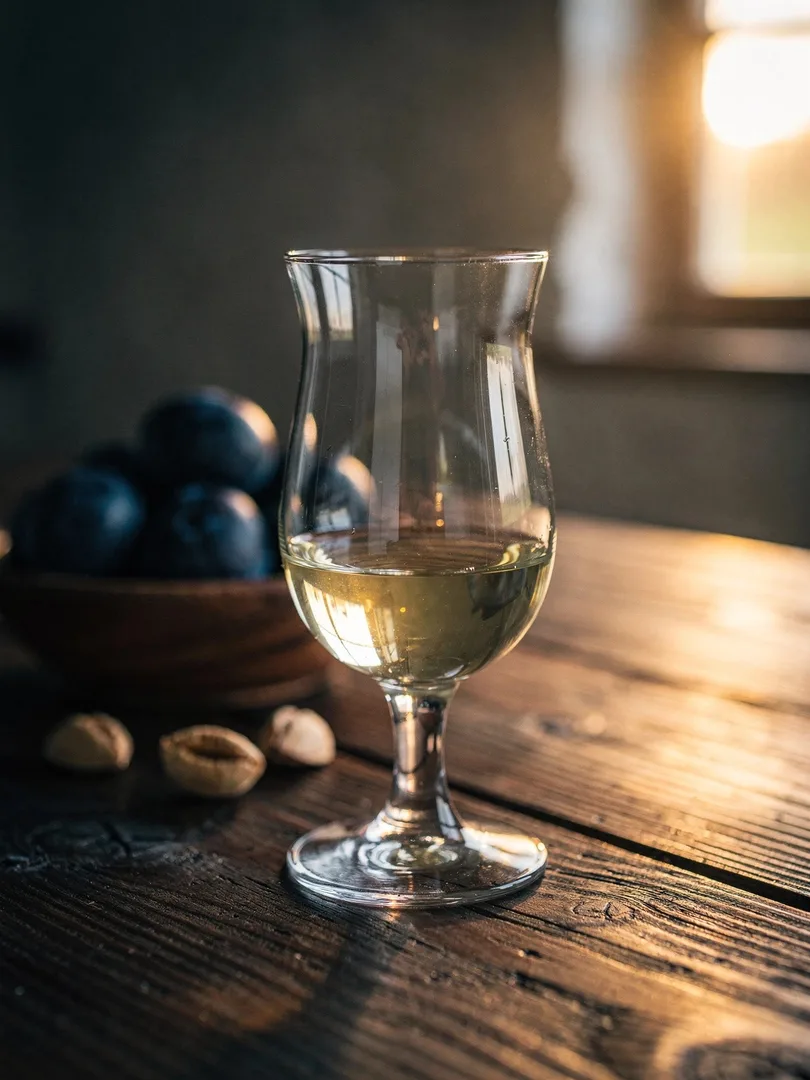
What's the difference between slivovice and slivovica? Almost nothing in the glass, the name just follows the language: slivovice is the Czech term for plum brandy, slivovica the Slovak one. Both are fruit brandies made from fermented plums, both have at least 37.5 percent alcohol, both may form their names with the suffix.
Moravian slivovice from Wallachia is the region's signature brandy. It's restrained on the nose, dry, and often carries a pit note of almond. It comes both clear and, in special lines, aged in oak and amber in color.
Slovak slivovica has, according to local tradition, been distilled around Bošáca for centuries; the local pálenica has existed since 1921 according to its owner, with an age of more than 300 years passed down by word of mouth. The village, considered a slivovica village, lies in the Trenčín region in western Slovakia.
It's important to distinguish this from Borovička. That's not a fruit brandy but a juniper spirit, resinous and herbal in taste, and belongs to a different category under EU regulation. Slovak Borovička names such as Spišská borovička have their own protected designations, which have nothing to do with plum brandy.
Equally clear: neither slivovice nor slivovica is registered as a protected designation of origin in the EU. Names like "Vizovická slivovice" or "Bošácka slivovica" do not appear in the EU register. Anyone who values origin should look at the producer and the place, not at a protection mark.
Moravian SlivoviceFruit brandy · Plums and Zwetschgen
- Alcohol
- 40–50 % vol
- Maturity
- 0–15 Years
Clear to amber, ripe plum, marzipan and pit character, dry on the finish.