Clear or Oak
Maturation & Storage
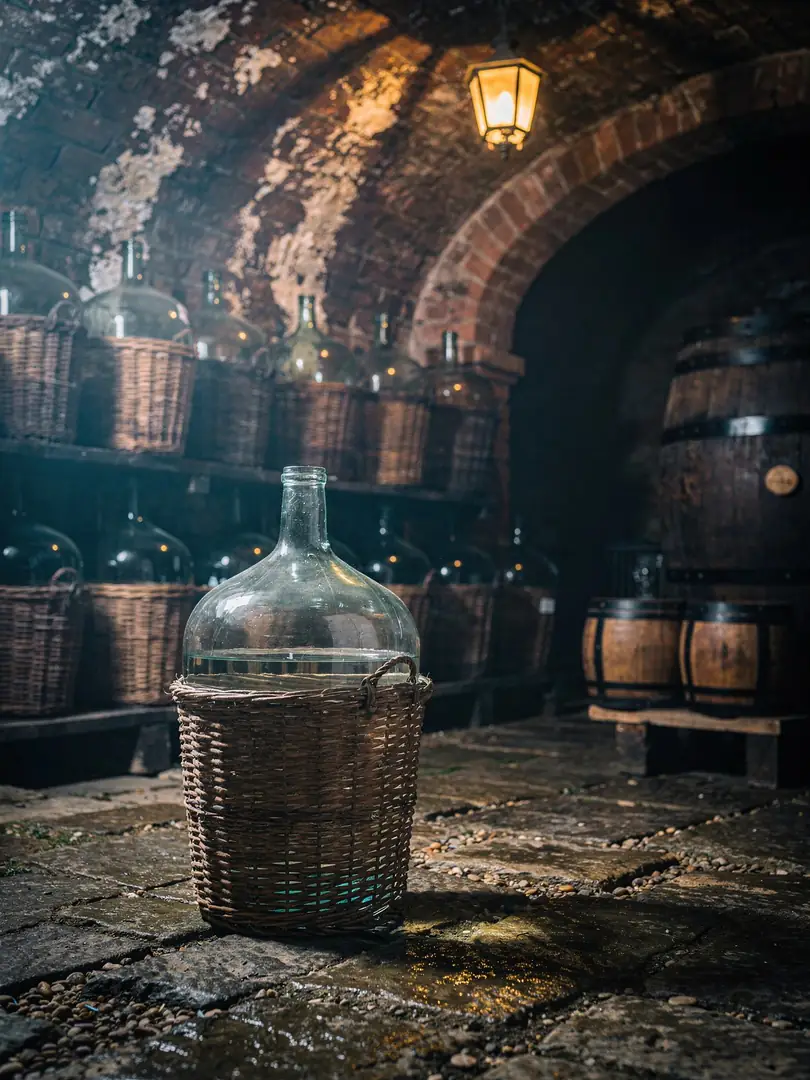
Freshly distilled slivovice is colorless and needs time to rest. Most distillers let it sit in glass or stainless steel after distilling so the aromas settle and the alcohol feels smoother. The EU sets no required maturation period for fruit brandy. A plum brandy may therefore go straight into the bottle right after distilling.
Those who want color and oak character use oak casks. The wood turns the slivovice amber to dark brown and lends vanilla and spice notes, while the pit character recedes into the background. Coloring with additives is prohibited for fruit brandy; only caramel coloring is allowed, and only if the brandy has been in contact with wood for at least a year.
According to retailers, the Rudolf Jelínek house in Vizovice also bottles aged lines, such as a 15-year Family Reserve at 45 percent alcohol and vintage bottlings at 50 percent. Such bottlings are the exception; most slivovice in the Czech Republic and Slovakia is drunk young.
Under EU regulation, an age statement may appear on the label only if it refers to the youngest component and the maturation took place under tax supervision. A vintage that states only the year of distillation therefore says nothing about years spent in cask.
Why oak changes so much is explained in detail under whisky. Pores, charring, and oxygen work differently there than with a plum brandy, but the principle is the same. For fruit brandy, wood is an option, not a requirement, and some distillers consider the clear spirit the more honest one.