Table and Custom
Food & Tradition
In the countryside, winter begins with Disznótor, the pig-slaughtering feast, where relatives and neighbors gather early in the morning. There's fresh hurka, sausages, and bread with lard, and a glass of Pálinka is often ready as a greeting. In Hungary, it's traditionally served before the meal, as an aperitif, rather than after as a digestif.
A clear, fresh brandy pairs especially well with rich, fatty food. Halászlé, the spicy fish soup made from carp or catfish found along the Danube and Tisza, goes well with the acidity of a Gönci Barackpálinka. A Gulyásleves or Túrós csusza—noodles with curd cheese and bacon—also give the brandy something to work against.
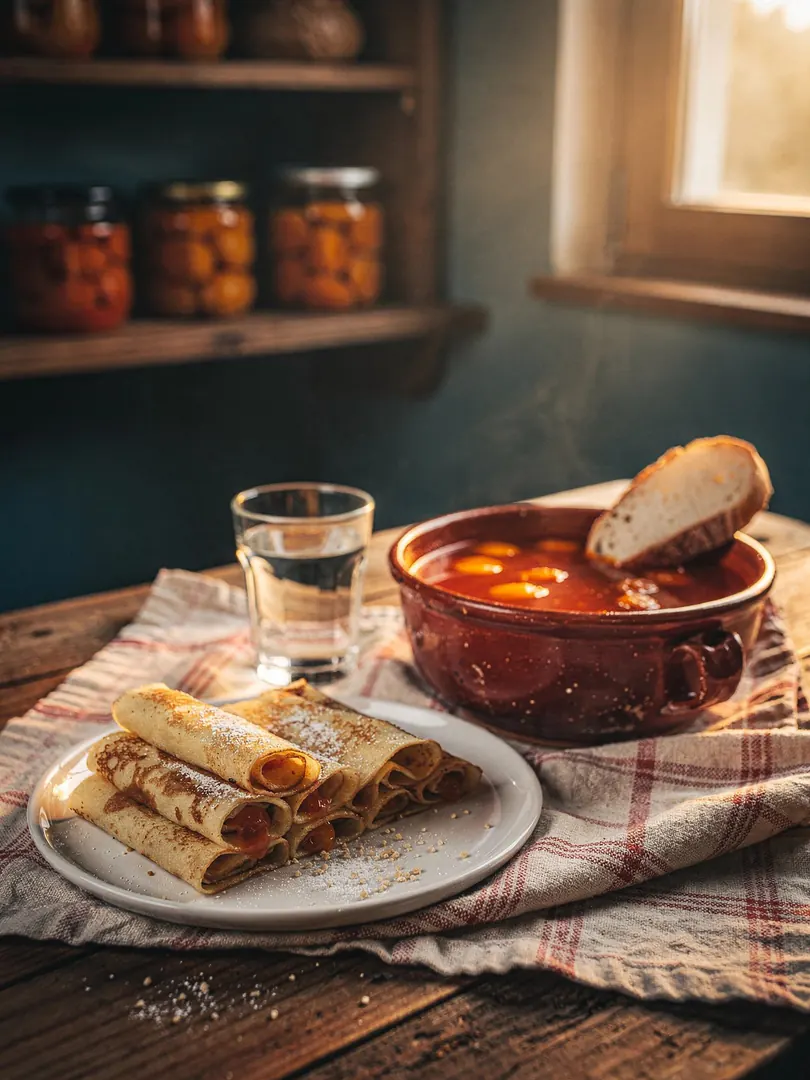
Sweets pair even more naturally. Baracklekváros palacsinta, pancakes filled with apricot jam, is a classic of Hungarian cuisine, and a Kecskeméti Barackpálinka alongside it echoes the fruit note without tipping into excess sweetness. Rétes, the thin strudel with fruit filling, belongs on this table too.
Törkölypálinka isn't an apricot brandy, so it calls for different dishes. Its dry spiciness suits cheese, smoked sausages, and hearty bread. It has little to do with fruit, but plenty to do with the country's wine culture.
In summer, when the apricots ripen, a good share of the harvest goes into baskets, cakes, and jars of jam, and only the rest goes into the mash. The aroma the brandy later shows is thus the very same one you can smell at any market stall in July. Taste both side by side, and you'll quickly understand why Hungarians link their Barackpálinka so closely to the fruit itself.
For all the brandies from this region, the same holds true: they're meant to be enjoyed in small measures and alongside food, not as a substitute for it. Anyone interested in the sweeter side of the menu will find fitting companions among the dessert wines.