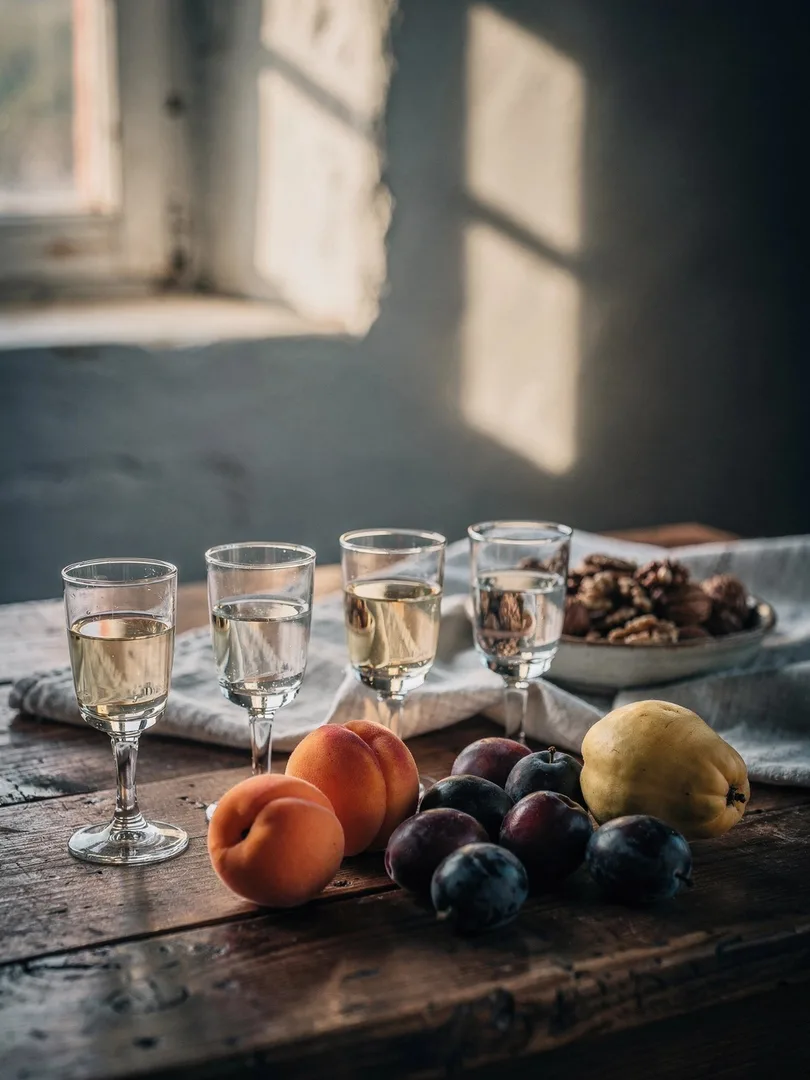
Glass and Aroma
Tasting
Choose something small and narrow for the glass: a nosing glass or a tulip-shaped glass that tapers at the top and holds the aroma in. A wide shot glass lets the aromas escape. A brandy is best served around room temperature, perhaps slightly cool, since too cold mutes the apricot's scent.
Start by nosing without putting the glass right up to your nose. A Barackpálinka smells of ripe apricot, often with almond or marzipan—the Kecskeméti tends to be softer and rounder, the Gönci bolder with more acidity. Only then take a small sip and hold it briefly in the mouth. A drop of water opens the brandy up if the alcohol feels too sharp.
Homokháti őszibarack pálinka offers a different picture altogether: ripe peach, citrus, a touch of marzipan, plus fine tannins. Nagykunsági szilvapálinka smells of ripe plum, with vanilla and spice joining in when wood-aged, while the quince version has an intensely floral, fruity bouquet.
With Törkölypálinka, look for different notes: grape skins, seeds, a herbal spiciness, little sweet fruit. Anyone who knows Grappa or Marc will find plenty of kinship here. It typically tastes drier than any fruit brandy, with a firmer finish.
When buying, check the label: Pálinka must be labeled as such, with a minimum of 37.5% ABV, and a protected name like Kecskeméti Barackpálinka or Gönci Barackpálinka signals its origin. An apricot brandy without these names can still be good, but it won't be a brandy tied to a specific region.